
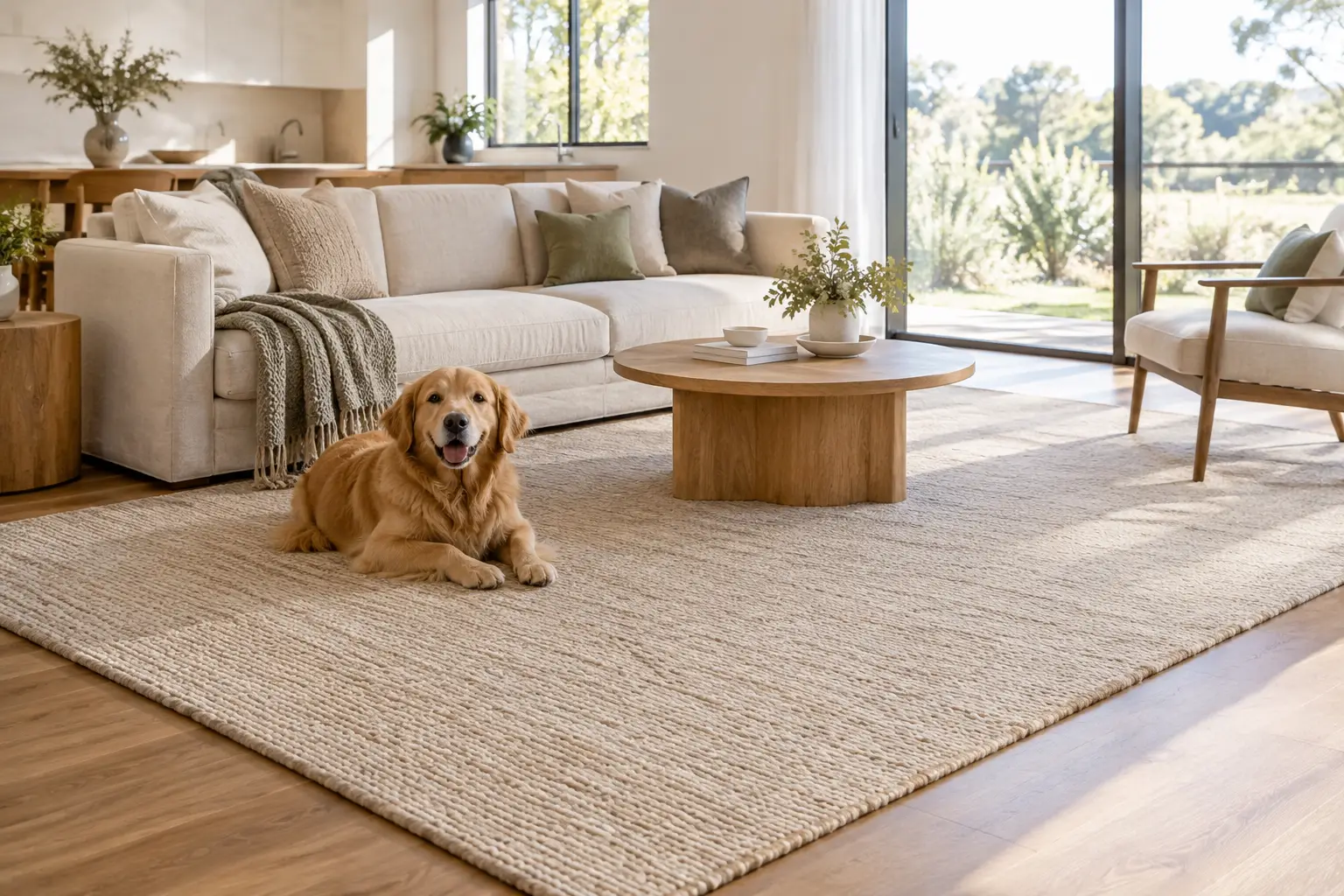
A wool rug often earns its place not through a flawless first week, but through how it settles into daily life: chairs shifting at the dining table, bare feet on timber floors, sunlight moving across an open-plan room. So, are wool rugs durable? Generally, yes. Wool is a resilient natural fibre with a spring-like structure that can help it recover from everyday compression, making it a considered choice for rooms that are used rather than merely looked at.
That said, durability is not a single quality. A rug’s construction, pile height, placement, colour, maintenance and the way your household uses a room will all affect how it wears. The right wool rug can bring warmth, texture and visual calm to a busy home for years, but it should be chosen with the same care as a sofa or dining table.
Why wool rugs are durable by nature
Wool fibres have a natural crimp, which gives them elasticity. When a footstep, sofa leg or dining chair applies pressure, the fibres can flex and, with time, recover more readily than less resilient fibres. This helps a wool surface retain a composed appearance in a living room or bedroom, particularly where the pile is well constructed.
Wool also has a pleasing density and weight underfoot. In a room with hard finishes - polished concrete, tile, engineered timber or floorboards - that materiality matters. The rug softens acoustics, adds warmth in cooler months and creates a more grounded layer beneath furniture.
But a wool rug is not indestructible. Repeated abrasion in one narrow path, constant chair movement or a very high-traffic entry can create visible wear over time. Think of wool as a practical, long-wearing material that benefits from thoughtful placement, rather than a material that removes the need for care.
Are wool rugs durable in high-traffic areas?
They can be, provided the rug’s design and construction suit the room. A lower, denser pile is often the more practical direction for a dining area, hallway or frequently used living zone. It tends to offer a neater surface where chairs need to move and where everyday foot traffic is concentrated.
A deeper or more sculptural pile can be especially effective in a bedroom or quieter sitting area. It adds softness and tactile depth, but may show compression more readily beneath furniture. This is not necessarily a flaw. A subtle change in pile direction or a lived-in surface can be part of the character of a textural rug, especially in a relaxed, tonal interior.
Placement matters as much as material. In an open-plan home, a generously proportioned rug can define the seating area and protect the flooring beneath it, while avoiding the narrow walkways that receive the most repetitive traffic. If a rug is too small, people tend to step around its edge rather than across it, and the room can feel less balanced. A larger rug that sits beneath the front legs of the sofa often gives the layout greater visual weight and a calmer sense of proportion.
Construction and pile shape change the wear story
Not all wool rugs will wear in the same way. Before deciding, look beyond the word “wool” and consider the surface you are bringing into the room.
A flatweave or low-pile rug generally has a more restrained profile. It can work well beneath a dining table, in an apartment entry or under a sofa where you want texture without too much visual bulk. A cut-pile rug feels softer and can create a quieter, more inviting living room, especially alongside linen upholstery, timber and warm-neutral walls.
Looped surfaces offer another textural effect, but they deserve careful consideration in homes where the rug may face frequent pulling or snagging. Similarly, raised patterns, carved lines and mixed-pile designs create sculptural interest, yet their varied surface will naturally show light and shadow differently as it is used. That movement is often part of the design, but it is worth understanding before expecting one completely uniform appearance.
The backing, edge finish and overall density also contribute to how a rug feels and performs. Product-specific construction details are always worth checking, particularly if you are choosing for a dining room, family room or a space with heavy furniture.
Colour and pattern can make everyday wear feel more considered
Durability is partly practical and partly visual. A rug may remain structurally sound while its surface begins to show marks, flattened areas or dust more readily than you would like. This is where colour and pattern become useful design decisions.
Very pale ivory can look fresh and expansive in a light-filled coastal home, but it may require more regular attention in an entry or beneath a family dining table. Conversely, a rug in oat, sand, taupe, stone, clay or muted charcoal can create a more forgiving visual field while still keeping the room light and restrained.
Subtle movement is useful too. A soft grid, irregular border, tonal variation or abstract curve can give the eye somewhere to travel, making the rug feel composed even as it becomes part of everyday life. This is different from choosing a loud pattern to conceal everything. A quiet design can still be practical, while allowing furniture, art and natural materials to remain the focus.
How to help a wool rug wear well
A few consistent habits can make a meaningful difference. Vacuum regularly using a setting appropriate to the rug’s construction, particularly in areas where dust and grit can work down into the pile. If you have a looped or high-texture surface, avoid aggressive vacuum heads that may catch or pull at the fibres.
Address spills promptly by blotting rather than rubbing, working carefully with a clean, absorbent cloth. Rubbing can push a spill further into the pile and disturb the surface. For a substantial mark or a more difficult cleaning task, seek advice from a professional cleaner experienced with wool rugs and follow the care guidance supplied for the particular piece.
Rotate the rug periodically where possible. This is especially helpful in rooms with strong Australian sunlight, as well as spaces where one side of the rug receives more foot traffic or furniture pressure than the other. Rotating helps distribute use more evenly and gives the room a chance to be seen with fresh eyes.
A suitable rug underlay is also worth considering. It can help the rug sit more securely, reduce movement on hard floors and provide a little additional cushioning. Just as importantly, it supports the sense that the rug is an intentional architectural layer rather than something that has simply been placed on the floor.
Choose durability for the room you actually live in
The most durable choice is not always the lowest pile or darkest colour. It is the one that suits the pace of the room. In a quieter bedroom, a tactile wool rug with broad, quiet curves may be exactly right beneath the bed, extending around 45 to 60 cm beyond each side for a more generous feel underfoot. In a dining space, a flatter construction with enough clearance for chairs to remain on the rug when pulled back is likely to be the more liveable option.
For a lounge room, consider where people walk from the kitchen, hallway or sliding doors. If the rug will anchor a sofa and occasional chairs, ensure it is large enough to hold the arrangement together rather than sitting like a small island in the centre. This improves the room’s structure and can reduce concentrated wear at the rug’s edges.
A wool rug will develop its own character over time. With considered materiality, sensible placement and regular care, that character can feel settled rather than tired - a tactile foundation that makes the rest of the room feel more resolved.
Beyond 100% Wool: What Actually Makes a Rug Last is a good place to gain in depth understanding of type of rugs and value of choosing right wool composition.