
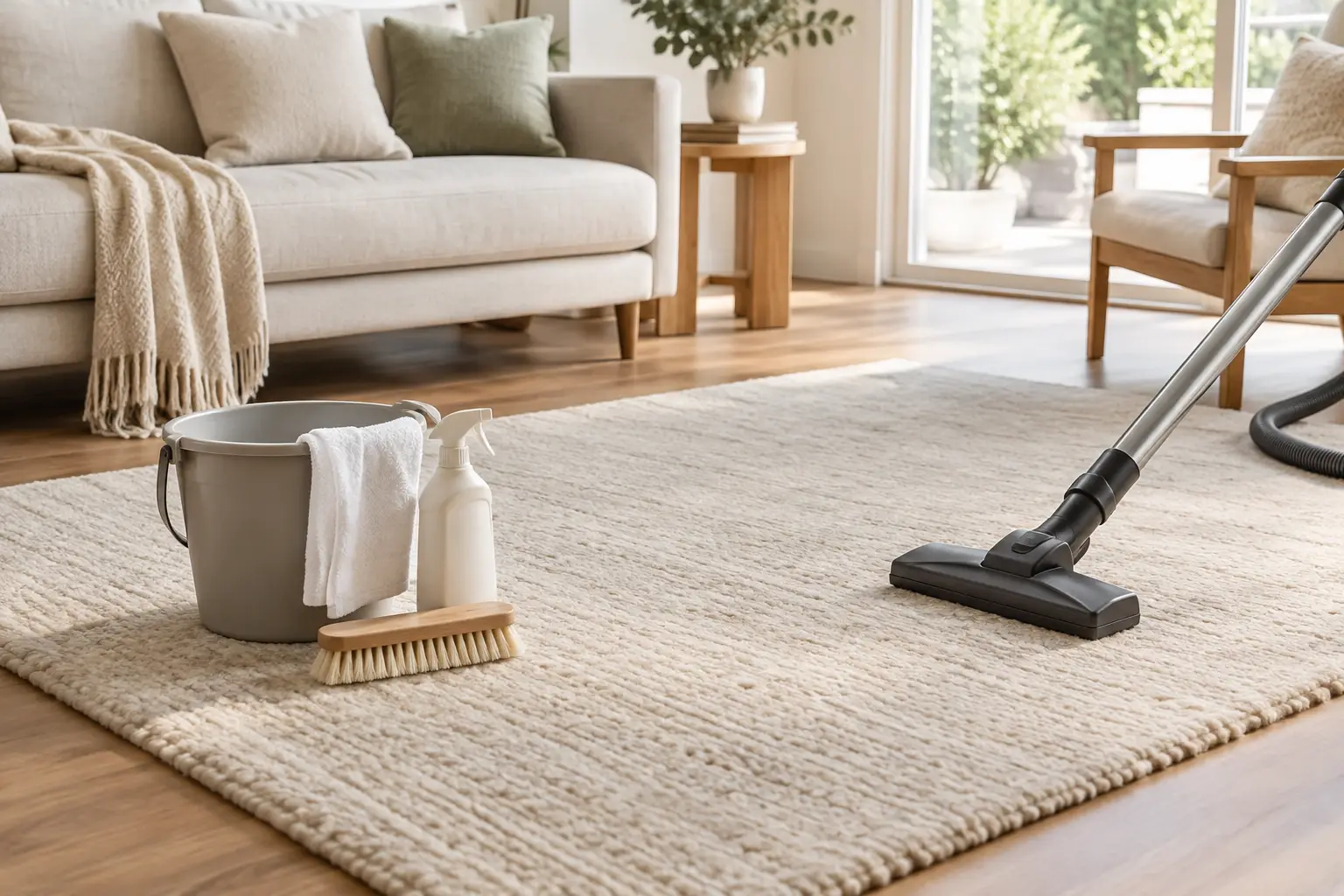
A wool rug earns its place through everyday use: under bare feet in a living room, beneath a dining table, or grounding a bedroom with warmth and texture. Knowing how to clean wool rugs properly helps preserve that composed surface without turning a small mark into a larger problem. The key is restraint - regular dry care, a fast response to spills, minimal moisture and patience while the rug dries.
Start with the care label and a discreet test
Before using any cleaning product, check the rug’s care instructions. Construction, dye method, pile height and backing can all affect what is suitable. A flatwoven wool rug may tolerate a different approach from a dense, textural pile with a cotton or latex backing.
If the instructions permit spot cleaning, test your chosen solution on an inconspicuous area first, such as a corner that sits under the sofa. Dampen a white cloth, apply a small amount of solution and blot gently. Once dry, check for colour transfer, a water mark or a change in texture. This small step is particularly worthwhile with tonal rugs, where an uneven patch can interrupt an otherwise quiet, balanced field of colour.
Avoid soaking a wool rug, using bleach, or reaching for strong alkaline cleaners. Wool responds poorly to harsh chemistry and excess water. A cleaner can remove a mark yet leave the pile rough, the dye disturbed or the backing slow to dry.
Routine care keeps cleaning light
Most wool rug care is not about washing. It is about removing loose dust and grit before they settle into the pile. In Australian homes with timber, concrete or tiled floors, fine dust can be surprisingly visible and can work down around the fibres over time.
Vacuum once a week in higher-use areas, or every one to two weeks in a quieter bedroom or study. Use a suction-only setting where possible. If your vacuum has an aggressive rotating brush, turn it off or use a hard-floor or upholstery attachment, especially on a looped, shaggy or textural rug. The brush can pull at fibres and make a sculptural surface look fuzzy before its time.
Vacuum slowly in the direction of the pile, then across it if needed. Do not forget the area beneath furniture edges, where dust collects unnoticed. For fringes, use the upholstery tool rather than running the vacuum head over them.
Some shedding can occur with a newer wool rug. Pick up loose fibres by hand or vacuum gently rather than pulling them. A small amount of care in the first months helps the rug settle into everyday life without becoming overworked.
Rotate for even light and wear
Rotate the rug by 180 degrees every six months, or more often if one side receives strong afternoon sun through glazing. This is useful in open-plan homes where one end of the seating zone takes more foot traffic, or in coastal homes with bright, shifting natural light.
Rotation will not prevent all change, but it can distribute use more evenly. It also gives you a practical moment to vacuum beneath the rug, check the underlay and reset furniture placement. A rug that sits squarely under the front legs of a sofa or chairs tends to feel more grounded, and is less likely to creep or ripple at the edges.
How to clean wool rugs after a spill
A spill does not always require a full clean. The first few minutes matter most. Work calmly and keep the treatment local.
Start by lifting solids with a spoon or the blunt edge of a knife. Do not scrape into the pile. For liquid, place a clean white cloth or plain paper towel over the spill and press down firmly. Replace it as it absorbs moisture, repeating until little transfers to the cloth. Blot from the outer edge towards the centre so the spill does not spread.
Next, dampen a clean cloth with cool water and blot the affected area. Keep the cloth damp rather than wet. If water alone is not enough, use a very small amount of wool-safe, pH-neutral detergent mixed with cool water, provided the care label allows it. Apply the solution to the cloth, not directly to the rug, then blot gently.
Finish by blotting with a second cloth dampened only with clean water. This helps remove detergent residue, which can attract more soil later. Press dry towels into the area, then allow the rug to air dry fully before replacing furniture or walking over it.
For a small patch, opening windows and using gentle airflow can help. Avoid direct, intense heat from a hairdryer or heater. Heat can set some stains and may affect the rug’s texture. If the rug has a backing, take extra care that moisture does not linger beneath it.
Treat common marks with care, not force
For muddy footprints, let the mud dry completely, then vacuum away as much as possible before attempting any spot treatment. Wet mud rubbed into wool becomes a much larger cleaning job.
For food or drink, blot first and use the mild solution only if needed. Red wine, coffee, tomato-based food and coloured cordial can be more difficult, particularly on pale ivory, oat or sand-toned rugs. Do not use salt, baking soda pastes or internet remedies without checking the manufacturer’s guidance. Abrasive powders and improvised mixtures can leave a visible residue or alter the pile.
For oily marks, resist the urge to scrub. Oil needs a treatment suited to the rug’s construction and dye, and a professional cleaner is often the more measured choice. The same applies to ink, nail polish, paint, pet accidents or an old stain that has already been treated several times.
When a whole-rug clean is appropriate
A wool rug does not need frequent deep cleaning, but there may come a point when routine vacuuming no longer restores its clarity. Perhaps the pile looks generally dull, there is a lingering odour after a spill, or the rug has been through a busy season of entertaining, children, pets and indoor-outdoor traffic.
For a valuable, large or heavily soiled wool rug, professional cleaning is usually the safest route. Choose a cleaner experienced with wool rugs and tell them about any previous spot treatments, the rug’s backing and the nature of the stain. Ask how they plan to clean and dry it. The right method depends on the rug, rather than a one-size-fits-all machine process.
At-home whole-rug washing is best avoided unless the care instructions explicitly permit it. Saturating a large rug is difficult to reverse in an apartment, townhouse or family home. It can take a long time to dry through, and moving it while wet may distort its shape. Renting a carpet cleaner is not automatically gentler - some machines apply more water than a wool rug should receive.
If professional cleaning is not yet necessary, a careful refresh can be enough. Vacuum thoroughly, attend to any individual marks and air the room on a dry day. Often, removing dust and allowing fresh airflow does more for the rug’s appearance than adding another cleaning product.
Protect the rug between cleans
An appropriate underlay helps support the rug, reduce movement and soften the feel underfoot. It can also limit abrasion between the rug and a hard floor. Check that the underlay is compatible with your flooring finish, particularly on sealed timber, vinyl or polished concrete.
In a dining area, pull chairs out and lift them rather than dragging them across the pile where practical. In a living room, felt pads beneath sofa and occasional-chair legs can reduce pressure marks. These are small habits, but they help a rug maintain its proportion and visual weight in the room.
Shoes, sunlight and sandy feet are not reasons to avoid wool altogether. They are simply part of a liveable home. A considered cleaning routine lets the rug remain an architectural layer - one that softens hard finishes, brings furniture into conversation and makes the room feel settled rather than overly precious.
If a mark feels uncertain, pause before trying the next remedy. A professional assessment is often less disruptive than a series of increasingly forceful treatments. With gentle upkeep and a little restraint, a wool rug can continue to bring texture and warmth to the everyday moments that matter most.