
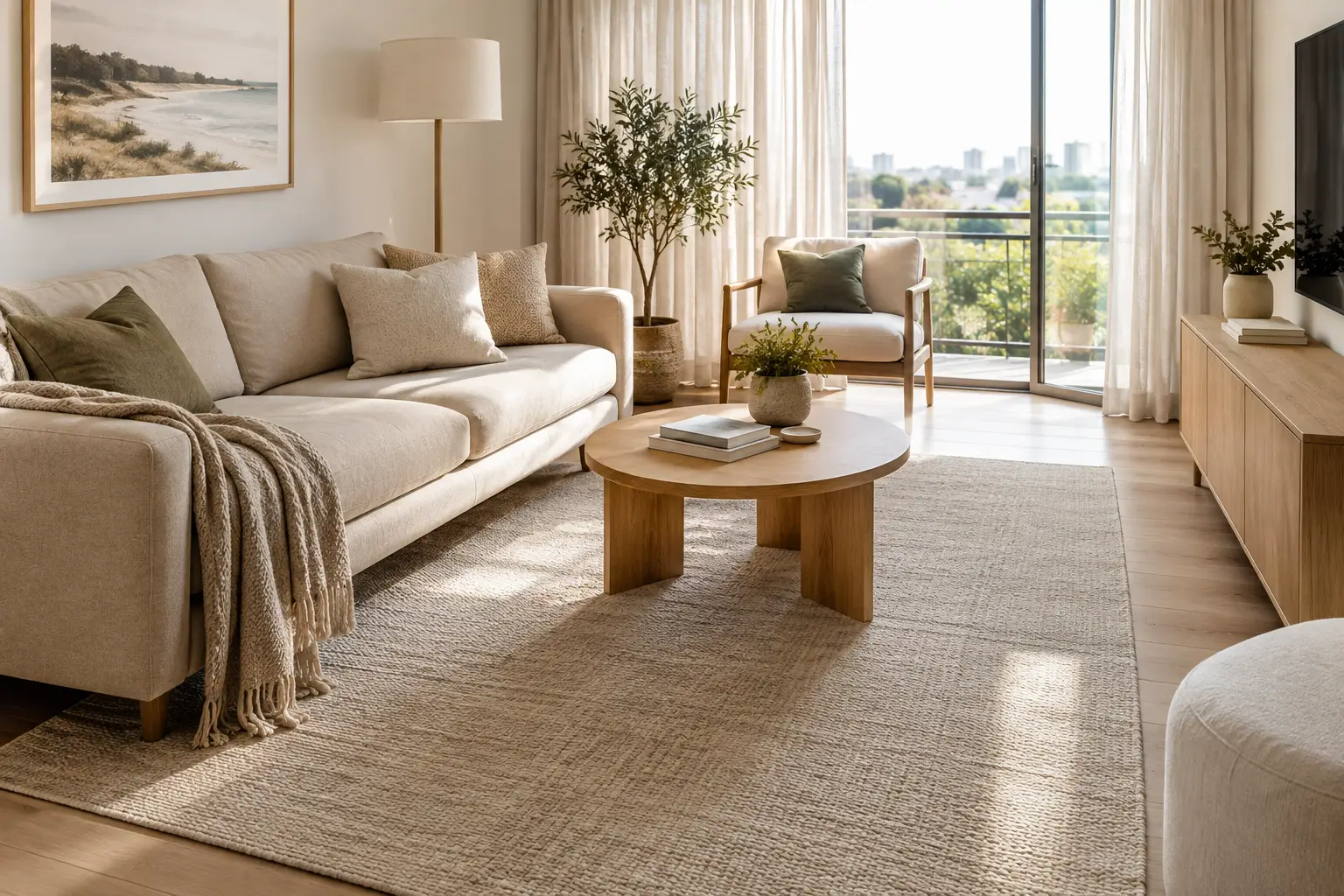
A compact living room can feel unsettled even when every piece of furniture is right. Often, the missing element is not another object but a sense of connection between the sofa, coffee table and occasional chair. Well-chosen rugs for small apartments create that connection. They ground the room, soften hard flooring and give a modest footprint a more composed, intentional feel.
The common instinct is to choose the smallest rug available so that more floor remains visible. In many apartments, this has the opposite effect. A rug that sits alone in the middle of the room can make furniture appear scattered and the room feel smaller. The more useful approach is to choose a size that supports the furniture arrangement, then use colour, texture and placement to keep the visual weight calm.
Start with the furniture, not the empty floor
A rug is an architectural layer. Its job is to define where a room begins and ends, particularly in an open-plan apartment where the living, dining and kitchen areas may share one continuous floor.
In a living area, aim for the front legs of the sofa to sit on the rug. If there are armchairs opposite or beside it, their front legs should ideally meet the rug too. This creates a single, grounded zone rather than a collection of separate pieces. Leave a visible border of floor around the rug where possible, but do not make that border the priority over furniture placement.
For many apartment living rooms, a 160 x 230 cm rug is a useful starting point. It can work beneath a two- or three-seat sofa with a compact coffee table, especially where the sofa is against a wall. A 200 x 300 cm rug may be the better decision in a generously proportioned apartment or combined living-dining space. It sounds counterintuitive, but a larger rug often makes the room read as more expansive because it gives the furniture a clear shared foundation.
Before deciding, mark the proposed dimensions on the floor with painter's tape or sheets of paper. Walk around the perimeter, open drawers and doors, and notice whether the rug creates an easy passage through the room. This simple exercise reveals proportion more reliably than an online image viewed in isolation.
Rugs for small apartments need clear placement
In the living room
Keep the rug centred on the seating arrangement rather than centred on the room itself. Those two points are not always the same. If the sofa sits closer to one wall, align the rug with the sofa and coffee table so the composition feels balanced from where you actually sit.
A narrow room benefits from a rug that extends along the length of the sofa rather than one that is too square. Conversely, a more compact, box-shaped room may suit a rectangular rug that gives the furniture structure without following every line of the architecture. The aim is measured contrast, not rigid symmetry.
Avoid placing only the coffee table on a small rug if the room allows for more. That arrangement can look like a decorative mat rather than an anchoring layer. There are exceptions: a very small studio with a lightweight lounge chair and petite sofa may need a smaller scale. In that case, choose a rug large enough to reach beneath at least the coffee table and the leading edge of the seating.
In a dining area
A dining rug can make an open-plan apartment feel organised, separating meals from the living zone without adding a wall or screen. The key measurement is the table at its fully extended size, if it extends. Add at least 60 cm beyond each side so chairs remain on the rug when pulled back.
For a round table, a round rug can create a soft, sculptural counterpoint to the straight lines of apartment joinery. It needs enough diameter to accommodate the chairs, however. A round rug that only frames the table top tends to feel undersized once people sit down.
Dining areas work hard, so consider the realities of daily use. A lower-profile construction and a tonal, textural surface can be easier to live with visually than a very pale, highly detailed design. This is not a rule against light colour. An ivory or oat rug can be quietly effective under a dining table, but it asks for a little more care around spills and chair movement.
In the bedroom
In a small bedroom, a rug should offer warmth where bare feet land rather than compete with the bed. For a queen bed, 160 x 230 cm is often a practical proportion when placed horizontally under the lower two-thirds of the bed. It should extend beyond both sides enough to be felt on getting up.
If the bed occupies most of the room, runners on either side can be a considered alternative. They retain a sense of softness underfoot while keeping door swings, wardrobes and circulation clear. A single large rug is generally more visually unifying, but runners are useful where the room's proportions make that impractical.
Choose visual calm over visual noise
Small apartments do not require plain interiors, but they do benefit from restraint. A rug has a large surface area relative to the room, so its colour and pattern carry real visual weight.
A warm-neutral palette of ivory, sand, taupe, stone, clay or muted charcoal works well with the timber, tiled floors and soft white walls common in Australian apartments. These shades do not need to match the sofa or flooring exactly. In fact, a little tonal variation prevents the room from feeling flat. A pale oat rug against mid-tone timber, for example, can create gentle contrast while preserving a calm overall effect.
Pattern is most successful when it supports the room rather than announces itself from every angle. Soft geometry, a subtle border, quiet curves or abstract movement can introduce character without making a compact space feel busy. If your sofa, cushions and artwork already carry pattern, a more textural rug may be the balancing element. If the rest of the room is pared back, a restrained sculptural motif can give it depth.
Natural light matters too. A sunlit coastal apartment may make cool grey read sharper than expected, while a south-facing urban room can benefit from the warmth of oat, clay and brown undertones. Order or view colour with the room's own light in mind, including the evening hours when most homes are actually used.
Materiality should suit everyday life
The right material is partly an aesthetic decision and partly a practical one. Consider how the room is used before focusing on the initial look. Is this a quiet bedroom, a work-from-home living area, a dining zone used every night, or the main landing place for shoes and bags after work?
Wool is valued for its natural texture and warmth underfoot, and it can bring a grounded quality to contemporary interiors. A wool rug may also have some initial shedding, particularly when new, so regular gentle vacuuming is part of settling it into everyday life. For any rug, follow its specific care guidance and attend to spills promptly by blotting rather than rubbing.
Pile height is another trade-off. A more tactile pile can add welcome softness in a bedroom or low-traffic sitting area. A flatter surface may suit a dining setting or narrow living room where chairs, doors and daily movement need to remain easy. There is no universally correct choice. The best rug is the one whose materiality supports the pace of your household.
Use one strong rug rather than several small ones
In a studio or one-bedroom apartment, it can be tempting to layer multiple small rugs to make each corner feel styled. Unless the zones are clearly separate, this often fragments the floor and makes the layout feel crowded.
One appropriately scaled living rug will usually do more than two or three small rugs. It creates a calm visual field, particularly alongside low furniture, broad curtains and a restrained colour palette. If you need to distinguish living from dining, use two rugs only when each one is large enough to properly hold its furniture. Their designs need not match, but they should share something - a similar warmth, tonal depth or level of pattern - so the apartment still reads as one home.
Rug pads can also be worthwhile on smooth timber, tile or polished concrete floors. Beyond helping the rug sit more securely, they can make the surface feel more cushioned and reduce shifting at the edges. Check the pad is appropriate for your floor finish before use.
Let proportion do the quiet work
A small apartment does not ask you to think small. It asks you to be deliberate. Give the seating area enough rug to feel anchored, choose a colour that works with the room's light, and allow the texture to add warmth without adding clutter.
When the scale is right, a rug becomes less of a decorative afterthought and more of the element that lets the whole room settle into place. CEVORI's design-led approach begins with that same idea: texture, proportion and quiet character for homes that need to work as well as they look.