
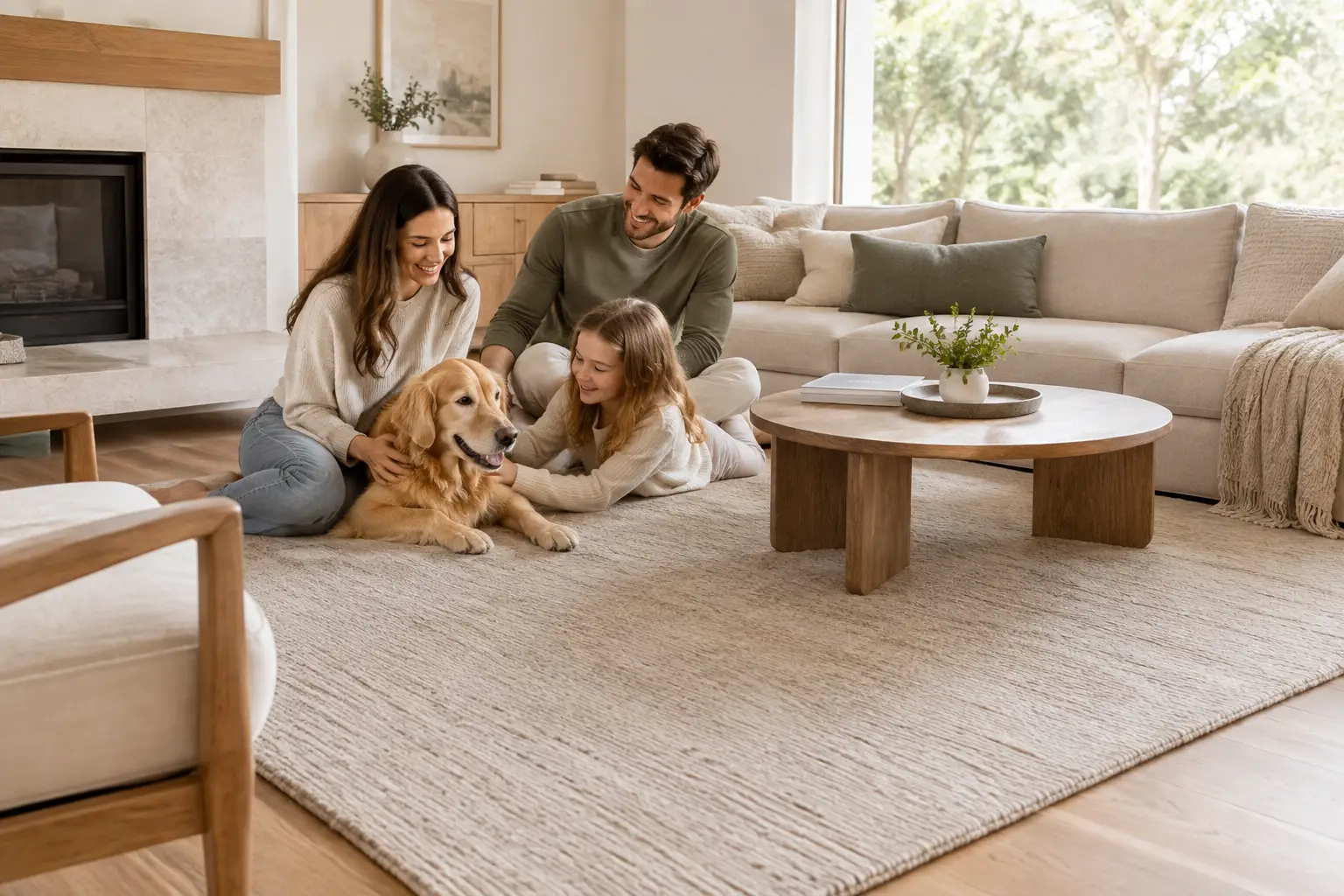
A family rug rarely stays pristine for long. It sits beneath snack-time crumbs, afternoon play, wet feet after swimming, scattered books and the daily traffic between kitchen, sofa and back door. That is exactly why wool rugs for families deserve considered attention: not as a delicate finishing touch, but as a grounding layer that helps a busy room feel softer, calmer and more resolved.
Wool can be a thoughtful choice for a family home when the rug’s scale, colour and texture suit the way you actually live. It asks for regular care and prompt attention to spills, but it also brings tactile warmth and visual depth that flatter the lived-in quality of a home. The key is choosing a design that can accommodate real life rather than competing with it.
Why wool rugs for families feel considered
A wool rug changes the experience of hard flooring. On timber, tile or polished concrete, it softens the underfoot feel and reduces the visual sharpness of a room filled with rectilinear furniture. In an open-plan new build, it can give the living zone a clear boundary without adding another wall or piece of furniture.
For family rooms in particular, wool has a character that works well with layered interiors. Its natural variation tends to create depth rather than a flat, uniform surface. A warm-neutral rug in oat, stone, taupe or muted clay can hold its place among timber joinery, linen upholstery, baskets, toys and the changing collection of objects that family life brings into view.
That does not mean every wool rug is automatically the right choice. A pale, high-contrast design may make every mark feel more noticeable in a household with toddlers. A very high pile can feel wonderfully soft, yet may be less convenient beneath a low coffee table or in a room where small toys regularly disappear. Materiality matters, but proportion and surface design are usually what determine whether a rug feels easy to live with.
Start with the room, not the household label
“Family-friendly” is often treated as a single category. In practice, a rug for a toddler household, a home with teenagers, or a quiet apartment where grandchildren visit on weekends will have different priorities.
Begin with where the rug will sit and how that zone is used. A living room that opens directly to a patio may benefit from a tonal, textural surface that does not rely on a spotless appearance. A formal sitting room used mainly in the evenings can accommodate a lighter palette or more sculptural detail. In a compact townhouse, one well-sized rug can make the main living area feel composed without asking the room to carry lots of pattern.
Think, too, about natural light. Strong Australian sun can make a cool grey rug appear blue and can wash out very pale shades near large windows. Requesting or reviewing colour carefully in the context of your flooring, walls and upholstery helps avoid a rug that feels disconnected once it arrives. Warm neutrals generally sit comfortably with the sandy light of coastal homes, the deeper tones of renovated character houses and the clean finishes of newer apartments.
Choose enough scale to anchor the activity
A rug that is too small tends to make a family living room feel fragmented. It leaves furniture floating at the edges and creates a narrow central island that becomes another obstacle in a high-traffic space.
As a useful starting point, allow the front legs of the sofa and occasional chairs to sit on the rug. In many Australian living rooms, a 200 x 300 cm rug suits a compact seating arrangement, while 250 x 350 cm or 300 x 400 cm may better ground a larger sectional sofa and armchairs. The right size depends on the room, of course, but a little extra coverage often creates more visual calm than a smaller rug with more exposed flooring around it.
Keep a clear border between the rug and walls where possible. Around 20 to 40 cm of visible floor can give the arrangement breathing room in a modest-sized room. In a larger open-plan area, the rug can be more generous, provided it connects the furniture rather than simply filling empty floor.
Let colour and pattern do quiet practical work
For a family home, restraint is often more useful than an all-or-nothing choice between white and dark charcoal. Mid-tones - soft taupe, mushroom, stone, warm grey, faded olive or clay - tend to provide visual depth while keeping the room light.
A mottled surface, subtle border, low-contrast grid or abstract movement can be especially forgiving visually because it introduces variation without becoming busy. This is different from choosing a loud pattern to conceal every sign of use. High-contrast motifs can dominate a room, particularly beside quiet upholstery and timber furniture, and may feel tiring over time.
Consider the rug alongside the largest surfaces in the room. With a cream sofa, a rug in oat or warm taupe adds definition without creating a hard outline. With a charcoal sofa, look for a design that includes warmer undertones so the room does not become overly cool or heavy. In homes with honey-toned or spotted gum timber, stone, sand and muted brown create a balanced bridge between the floor and furniture.
Select texture for everyday ease
Texture is where a wool rug can bring real character to a restrained room. Broad, quiet curves, a lightly raised line or a folded-looking surface can add sculptural interest without requiring more decorative objects. But texture should be chosen with the room’s daily rhythm in mind.
Low to medium pile rugs often sit neatly beneath coffee tables and make it easier to move dining chairs nearby. A more pronounced loop or cut-pile design adds softness and shadow, though it may require a little more attention when crumbs, craft materials or small pieces find their way into the fibres. There is no universal best option - a quieter, flatter construction may be preferable for a highly active family room, while a deeper texture can be worthwhile in a lower-traffic retreat or bedroom.
Also consider the furniture feet. Heavy sofas, narrow chair legs and sharp-edged coffee tables can all affect how a rug settles over time. A rug underlay, selected to suit the floor beneath, can help the rug sit more securely and reduce movement. Check the flooring manufacturer’s guidance first, especially with newly finished timber or vinyl surfaces.
Care that fits a busy household
A wool rug is not a no-care object, and it is better to be realistic about this before choosing one. Regular, gentle vacuuming helps remove dry soil before it settles into the surface. Use a suitable vacuum setting and take extra care around fringes, raised details or looser textural elements.
When a spill happens, deal with it promptly. Blot rather than rub, working with a clean, absorbent cloth to lift moisture without spreading it further. Avoid saturating the area or applying an unfamiliar cleaning product directly to the rug. For a mark that remains, follow the specific care instructions supplied for the rug and seek professional advice where needed.
Shedding can occur with new wool rugs, particularly in the early period of use. This is part of living with a natural fibre surface and generally calls for patient vacuuming rather than aggressive brushing. Rotating the rug periodically can also help distribute daylight and foot traffic more evenly, especially in rooms with large north- or west-facing windows.
A practical family routine is less about chasing perfection and more about preventing small issues from becoming permanent ones. Keep shoes off the rug if that suits your household, use trays for messy activities, and place a durable mat at external doors to reduce the amount of grit brought inside. These small decisions protect both the rug and the calm of the room.
Give open-plan rooms clearer structure
In homes where kitchen, dining and living zones share one large floorplate, a rug can make family life feel less scattered. It establishes the lounge as a distinct place for conversation, reading and rest, even when the kitchen bench is only a few steps away.
Choose a rug that is large enough for the living furniture alone rather than trying to stretch one rug across every function. The dining table usually benefits from its own defined zone, with enough rug extending beyond the chair legs when they are pulled out. This separation gives each area a purpose and keeps the overall layout from feeling visually crowded.
A restrained palette helps these zones relate to one another. You might use a stone-toned wool rug in the living area and repeat its warmth through dining chairs, ceramics or curtains, rather than matching every item exactly. The result feels connected, but still relaxed enough for everyday life.
The most successful family rug is not the one you are nervous to use. It is the one with the right visual weight, scale and texture for your room - substantial enough to anchor the furniture, quiet enough to live alongside the messier moments, and considered enough to keep earning its place as the household changes.
Before choosing, measure the furniture arrangement with painter’s tape on the floor and live with the outline for a day or two. It is a simple way to see whether the rug will support the home you have, rather than the one you imagine on a particularly tidy morning.