
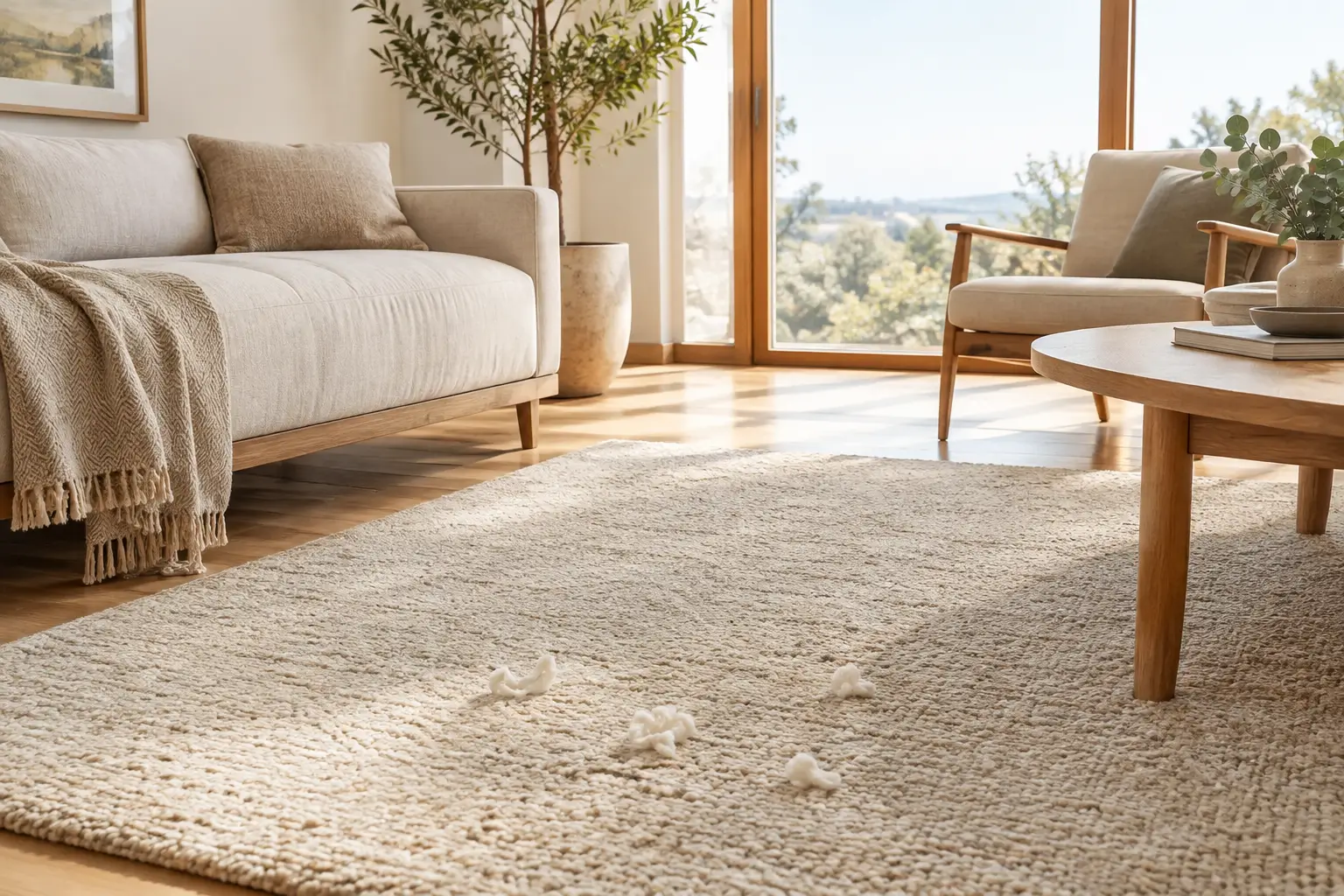
A new wool rug can leave a light layer of fibre in the vacuum canister or gather soft fluff along its surface, particularly in the first weeks at home. So, why do wool rugs shed? In most cases, it is a normal settling process: loose fibres left from spinning, weaving or finishing gradually work free as the rug is walked on, vacuumed and lived with.
For a material chosen for its warmth, depth and tactile character, this can feel counterintuitive. But shedding is not automatically a sign that something is wrong. What matters is the amount, the pattern and whether it eases over time.
Why do wool rugs shed in the first place?
Wool is made of short, natural fibres that are spun into yarn. During production, some tiny fibre ends and surplus pieces remain caught within the pile. Once the rug is unrolled and placed in a room, everyday movement brings those loose fibres to the surface.
Foot traffic, moving furniture, children playing on the floor and regular vacuuming all help this process along. A rug in a busy family room will generally release loose fibres more quickly than one placed beside a bed or in a quieter sitting room. This does not necessarily mean it is shedding more overall - it may simply be settling faster.
The visual effect also depends on colour and setting. Pale wool fluff can be especially noticeable on charcoal tiles, dark timber or polished concrete, while darker fibres may stand out on a light oak floor. In a room with strong afternoon light, you may see fibres more clearly than you would in softer, filtered light.
Pile, yarn and surface texture all play a part
Some wool rugs have a denser, lower surface; others are more textural, with loops, cut pile, irregular yarns or sculptural shifts in height. Those design details change how a rug feels underfoot and how it catches the light, but they can also affect what you notice during the settling period.
A more open or plush pile has greater capacity to hold loose fibres before they rise to the surface. A rug with a highly tactile finish may therefore appear to shed more at first than a flatter weave. Neither approach is inherently better. It is a question of materiality, visual weight and how the rug will be used in the room.
Shedding, fluff and pilling are not the same thing
It helps to separate three common experiences. Shedding is the release of loose, short fibres from the rug, most often when it is new. Fluff is the soft accumulation of those fibres on the surface or in your vacuum. Pilling is different again: it occurs when fibres on the surface twist together into small balls through friction.
Pilling can happen where there is repeated movement, such as in front of a sofa, under dining chairs or along a frequently used path through an open-plan living area. It is often more visible on a textured pile. Small pills can usually be carefully removed by hand or with a tool designed for the purpose, without pulling at the yarn.
Avoid treating pilling as a reason to shave or aggressively brush the rug. Wool responds best to measured care. Pulling fibres, scraping the surface or using a harsh appliance can disturb the pile and create more visible change than the original pill.
How long should wool rug shedding last?
There is no universal timetable. The amount and duration depend on the rug’s construction, pile height, room use and cleaning routine. New rugs commonly shed most noticeably early on, then reduce gradually as loose fibres are removed.
A rug in a quieter bedroom may take longer to settle because there is less traffic. Conversely, a rug grounding a living zone with daily use may release more fibre in the beginning but reach a steadier state sooner. Seasonal habits can play a role too. During an Australian summer, open doors, indoor-outdoor movement and more bare feet can increase the amount of activity across a rug.
The key is the direction of change. Normal shedding should become less noticeable over time, not escalate month after month. If you are seeing broad areas of thinning, bare backing, long strands pulling free, or a sudden and persistent increase in fibre loss, pause your usual cleaning routine and seek advice from the retailer or a qualified rug-care professional.
Care that lets a wool rug settle gently
Gentle, regular vacuuming is usually the most useful response to early shedding. It removes loose fibres before they compact into the pile or travel through the room. For many wool rugs, a suction-only setting is the cautious choice, particularly for a looped or textural surface. If your vacuum has a rotating brush, turn it off where possible, or follow the rug’s specific care guidance.
Vacuum slowly in the direction of the pile rather than making repeated, forceful passes over one area. There is no need to vacuum every day simply because the rug is new. A considered routine suited to the room is enough: more often in a high-use living space, less often in a low-traffic bedroom.
If loose fibres gather on the surface between cleans, pick them up by hand or use a gentle vacuum pass. Do not pull at protruding yarns. A single longer fibre may be part of the pile rather than shed material. If needed, carefully trim it level with the surface using sharp scissors, without tugging.
For spills, act promptly by blotting with a clean, absorbent cloth. Rubbing can push moisture deeper into the pile and roughen the surface. Avoid saturating the rug or applying household cleaners without checking its care instructions first. Wool has particular cleaning needs, and an overly enthusiastic remedy can be harder on the material than the spill itself.
Placement can reduce unnecessary friction
A rug should be sized and positioned for the way a room is actually used. In a living room, allowing the front legs of the sofa and occasional chairs to sit on the rug helps it read as an intentional architectural layer rather than a small island in the centre. It also creates a more stable furniture arrangement, with fewer edges catching underfoot.
Under a dining table, leave enough rug beyond the chairs so they remain on the surface when pulled out. As a practical guide, this is often around 60 to 70 cm beyond the table edge. It will not eliminate pile compression, but it reduces the repeated drag of chair legs catching on the rug’s border.
A suitable rug underlay can also help keep the rug in place and soften the feel over timber, tile or concrete. Check that the underlay is appropriate for both the rug backing and your flooring finish. Stability matters in everyday living, especially in rooms that connect to patios, kitchens or hallways.
When shedding deserves closer attention
Most new-rug shedding is manageable, even if it initially looks more dramatic than expected. Still, it is sensible to distinguish settling from a problem. Look more closely if fibre loss is concentrated in one patch, the pile appears visibly uneven, yarns are continually coming loose, or vacuuming produces the same heavy volume long after the initial settling period.
Also consider what is happening around the rug. A powerful brush head, frequent chair movement, a snagged edge or furniture legs without protective pads can all create localised stress. In a home with a lot of daylight, a change in the pile direction may look like fading or thinning when it is simply the surface reflecting light differently. View it from more than one angle before assuming the worst.
If you are choosing a wool rug for a busy home, it is worth accepting the trade-off with clear eyes. Wool brings visual softness, tonal variation and a grounded feel that synthetic surfaces often cannot replicate in the same way. It also asks for a little patience at the beginning and a care routine that respects the pile.
A rug is not merely a soft furnishing placed after everything else is done. It brings furniture into proportion, quietens hard flooring and gives an open-plan room clearer structure. Let a new wool rug settle into that role gradually: vacuum with care, allow for a little early fluff, and pay attention to the long-term behaviour of the surface rather than the first few weeks alone.