
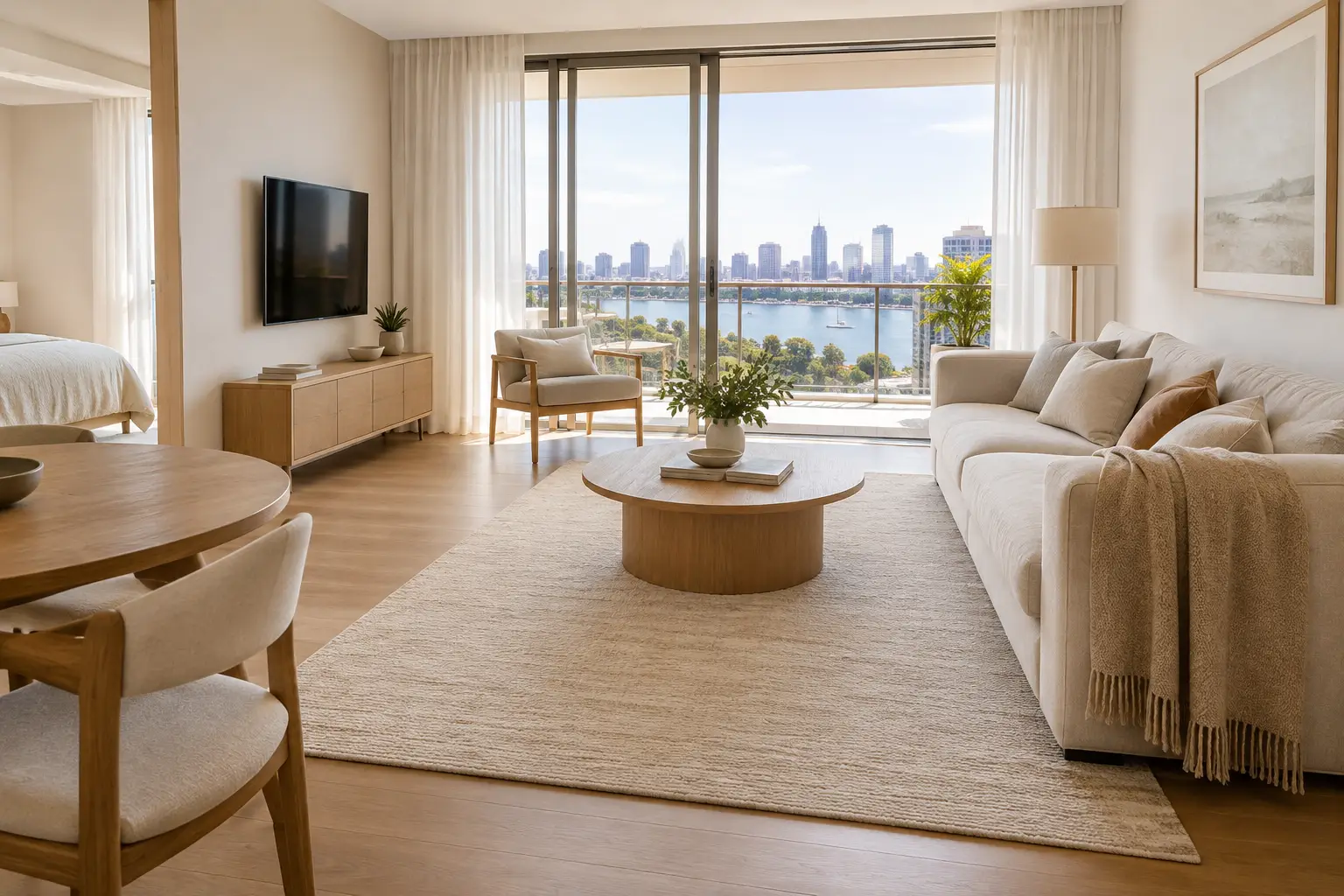
A rug can make a compact apartment feel composed rather than crowded, but only when its scale and placement are doing real work. The most useful apartment rug examples are not simply about choosing a colour you like. They show how a rug can anchor furniture, soften hard flooring and give a living, dining or sleeping zone a clearer sense of purpose.
Apartments ask more of each piece. A sofa may sit within sight of the dining table, the entry may open directly into the living area, and one room may need to feel generous enough for everyday life without being filled with objects. A considered rug creates visual structure without adding bulk.
Start with proportion, not pattern
The common instinct in a smaller home is to buy a small rug so the floor feels open. Often, this has the opposite effect. A rug that floats in the middle of the room can make furniture appear scattered and the room feel less resolved.
Instead, choose a size that relates to the furniture grouping. In most apartment living rooms, a rug should sit beneath at least the front legs of the sofa and occasional chairs. This draws the seating together as one deliberate zone. Aim for 15 to 30 cm of rug extending beyond each side of the sofa where the room allows.
For a typical two- or three-seat sofa, a 160 x 230 cm rug can work in a genuinely compact footprint. A 200 x 300 cm rug is often the more balanced choice in an open-plan living area, particularly when the sofa is around 220 cm wide. The right answer depends on clearances: leave enough exposed flooring around the rug to read the shape of the room, but not so much that the rug becomes a small island.
Texture also matters. On timber, concrete-look tile or engineered flooring, a wool rug with a tactile surface can introduce warmth without the visual busyness of a high-contrast pattern. In a smaller space, materiality is often more effective than decoration.
Apartment rug examples for common layouts
1. The narrow living room
A long, narrow living room benefits from a rug that follows the room's direction. Place a rectangular rug lengthways beneath the sofa, coffee table and the front legs of a lounge chair. This reinforces the room's natural line rather than cutting across it.
For example, a 200 x 300 cm rug can sit parallel to a 2.4-metre sofa, with the shorter edge running beneath the sofa's front legs. A tonal design in oat, stone or muted charcoal will give the space visual weight while allowing the room's boundaries to remain calm.
Avoid a rug that is too narrow for the sofa. If the sofa projects noticeably beyond both rug edges, the seating area can feel top-heavy. When a larger rug is not practical, centre a 160 x 230 cm option carefully under the coffee table and let it reach the sofa's front legs rather than stopping well in front of them.
2. The open-plan living and dining area
In an open-plan apartment, the rug is a useful architectural layer. It marks where the living room begins, even when there are no walls between the sofa, dining setting and kitchen.
Position the rug so it grounds the lounge zone only. It does not need to sit halfway between living and dining furniture to connect the two. In fact, a little breathing room between zones usually creates a more composed result. A 200 x 300 cm rug beneath the lounge, paired with a dining table that has its own clear footprint, often gives each activity a distinct place.
Choose colours that relate rather than match exactly. A clay-toned rug can work beautifully with pale timber dining chairs and cream upholstery, while a warm grey-brown design may settle a room with concrete floors and black accents. The goal is tonal continuity, not a perfectly coordinated set.
3. The apartment with a floating sofa
A floating sofa - one placed away from the wall - is common in newer apartments with broad windows or balcony doors. Here, the rug must be generous enough to support the sofa's full depth and the furniture opposite it.
If the sofa back faces the dining area, place the rug beneath the front legs or, where space allows, all four legs of the sofa. Extend it toward the chairs or TV unit so there is a clear shared ground plane under the whole seating arrangement. This prevents the sofa from appearing as though it has been parked in the room.
A restrained border, broad quiet curves or a low-contrast grid can add shape without competing with the view. This is especially useful in apartments with strong urban outlooks, patterned balcony tiles or changing coastal light.
4. The bedroom where the bed fills the room
When a queen bed occupies most of the bedroom, a large rug placed under the lower two-thirds of the bed is often more effective than two small runners. It creates softness at the sides and foot of the bed while keeping the headboard area visually clean.
For a queen bed, consider a rug around 200 x 300 cm, placed horizontally so it extends beyond both sides of the mattress. You ideally want at least 45 to 60 cm of rug visible at each side for a comfortable landing underfoot. If this leaves too little clearance near wardrobes or doors, two matching runners may be the more practical choice.
A pale ivory or sand rug can brighten a room with limited natural light, though a mid-tone taupe or brown may be easier to live with beside the bed in a busy household. This is one of those decisions where everyday ease should guide the palette.
5. The dining nook with little room to spare
A dining rug can be useful in an apartment, particularly where the table sits directly beside the living area. It softens the acoustic feel of hard floors and makes a compact dining nook feel intentional. Yet it needs enough room for chairs to remain on the rug when pulled out.
Measure from the table edge and add at least 60 cm on all sides. A round table generally sits best on a round rug or a generously sized square rug, while a rectangular table suits a rectangular shape. If the required rug would run into the kitchen joinery or block a walkway, skip it. A dining rug is not essential in every apartment, and a clear circulation path matters more.
Choose a low, textural surface over a deep pile where chairs are moved regularly. A subtle abstract pattern or darker warm-neutral field can also make daily marks less visually prominent than a very pale plain design.
6. The studio or multipurpose room
In a studio apartment, a rug can set the boundary of the living zone without resorting to bulky room dividers. Place it under the sofa and coffee table, then allow the sleeping area to remain on exposed flooring or use a smaller bedside runner for a gentler transition.
One larger rug usually looks more confident than several small rugs competing for attention. A sculptural, tonal design gives the living space character while maintaining a restrained overall palette. If the studio receives strong afternoon sun, observe how samples or colours appear at different times of day before choosing. Warm whites can read creamier in low light and crisper beside cool daylight.
Colour and visual weight in smaller homes
A light rug can make an apartment feel open, but it is not the only option. Mid-tone rugs in taupe, mushroom, clay and softened brown can provide a grounded counterpoint to pale walls, light oak and linen upholstery. They also help a low-profile sofa feel settled rather than visually weightless.
Dark charcoal can work in a sunlit apartment with pale flooring and generous glazing, especially when repeated in a lamp base, artwork or dining chairs. In a dim room, however, a large dark rug may feel heavy unless there is enough contrast from walls and upholstery. Look at the rug as part of the room's whole tonal balance, not as an isolated swatch.
Pattern should be scaled to the room as well. Fine, low-contrast movement often gives a compact space more depth than a bold central motif. It draws the eye across the floor while leaving room for timber grain, textiles and personal objects to contribute their own texture.
Make the practical checks before committing
Before choosing a rug, mark its proposed size on the floor with painter's tape. Open doors, pull dining chairs back and walk from the entry to the balcony or kitchen. This simple exercise reveals whether a larger size feels generous or whether it interrupts the way the apartment works.
Also consider the rug's relationship with transitions. It should not sit awkwardly against a kitchen island, cover a floor vent or create a pinch point near a sliding door. For tiled apartments that feel cool underfoot through winter, a rug in the living or bedroom zone can add a welcome layer of warmth, while still allowing the hard flooring to keep the room feeling light through warmer months.
The most successful apartment rugs do not fill every available centimetre. They give furniture a grounded place to belong, leave circulation clear and introduce enough texture to make a compact home feel settled. Begin with the layout you live with every day, then choose the rug that makes that arrangement feel more intentional.