
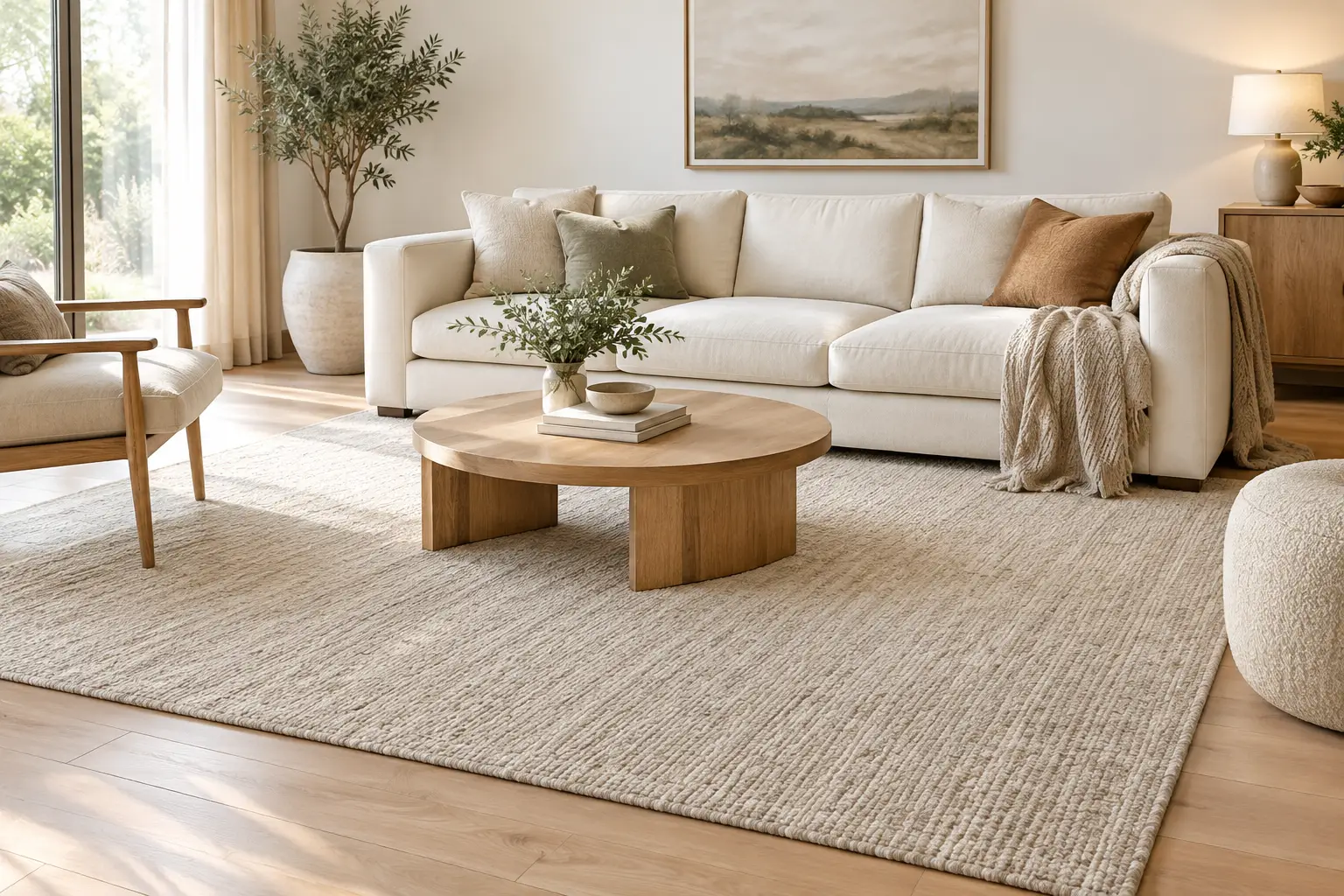
A cream sofa gives a living room space to breathe, but it can also leave the scheme feeling slightly unresolved. The best rugs for cream sofas bring in enough contrast, texture or tonal depth to ground the seating area without losing the softness that made the sofa appealing in the first place.
Rather than looking for one universally right colour, begin with the role the rug needs to play. It may need to define a zone in an open-plan home, soften a tiled floor, connect timber furniture, or give a pale room more visual weight. A considered choice should make the sofa feel intentional, not simply blend into the background.
Start with the undertone of the cream
Cream is not a single colour. Some sofas lean buttery and warm, others have a subtle pink, yellow, grey or ivory cast. This undertone is the quiet guide for the rug beneath it.
A warm cream sofa tends to sit comfortably with oat, sand, taupe, camel, clay and soft brown. These shades create a layered, tonal room that feels relaxed rather than overly matched. In a home with oak or walnut timber, a rug with warm beige and brown movement can bring the upholstery and joinery into the same visual conversation.
A cooler cream or off-white sofa can take stone, mushroom, soft grey, muted charcoal and washed olive particularly well. The aim is not to make the room colder, but to give the pale upholstery a little definition. A grey-leaning cream sofa beside a very yellow beige rug can feel disconnected, even when both colours are technically neutral.
When ordering online, look at rug imagery alongside the sofa fabric where possible, then consider the room's natural light. Strong western afternoon light can make warm neutrals appear more golden, while a coastal room with cooler daylight may make the same rug read quieter and more stone-like.
The best rug colours for cream sofas
Tonal sand and oat for a quiet, layered room
A sand, oat or pale taupe rug is often the most forgiving choice for a cream sofa. It creates a restrained warm-neutral palette with gentle variation between the sofa, floor and rug. This works especially well in apartments and new builds where the living area needs softness without extra visual noise.
The trade-off is contrast. If the sofa, rug, walls and flooring are all very close in value, the room may feel washed out. Add definition through a deeper timber coffee table, blackened metal lamp, ceramic side table or cushions with a little tonal contrast. A subtly bordered rug can also frame the seating area without introducing a loud pattern.
Clay, tobacco and earthy brown for warmth
For cream sofas in homes with pale timber floors, travertine-look tiles or white walls, earthy rugs can provide welcome visual weight. Think muted terracotta, clay, tobacco, cinnamon-brown or deeper taupe rather than bright rust. These shades are warm but grounded, and they make a cream sofa feel more settled in a larger room.
This direction suits renovated character homes and contemporary spaces that need a little more materiality. Keep the pattern broad and restrained. Fine, busy motifs can compete with the calm presence of a large cream sofa, while soft abstract movement or a tonal grid adds character at a more liveable volume.
Olive, sage and muted blue for gentle contrast
Cream is a useful companion to subdued colour. An olive or sage rug can give a room an earthy, architectural quality, particularly when paired with timber, linen curtains and textured ceramics. Muted blue-grey can work beautifully too, though it generally suits cooler creams and rooms that receive generous warm light.
Choose softened, mineral versions of these colours rather than clear or saturated shades. A rug has considerable surface area, so even a colour that feels modest in a sample can become dominant at 2 m x 3 m. If you are uncertain, look for a design where colour sits within a tonal field instead of covering the entire rug evenly.
Charcoal and deep brown for stronger definition
A cream sofa can carry a dark rug surprisingly well. Muted charcoal, espresso brown or near-black details give the seating area a more sculptural outline and can balance dark window frames, artwork or cabinetry. This is particularly effective in open-plan rooms where pale furniture otherwise appears to float on a large expanse of flooring.
The practical consideration is visual weight. A very dark, flat rug may make a compact lounge feel smaller. A charcoal rug with flecks of stone, taupe or ivory usually feels less severe, while still giving the cream sofa a clear place to sit.
Use texture when colour is kept quiet
If your room already has a balanced neutral palette, texture may be more useful than another colour. A low, tonal rug with raised curves, a subtle grid, folded forms or varied pile direction can make a cream sofa feel layered and considered without asking the room to do too much.
Texture matters most where surfaces are hard and light-reflective. Timber, polished concrete and tile benefit from a rug that softens the visual and physical feel of the room. In a warm-weather Australian home with doors opening to a deck or courtyard, this tactile layer helps the indoor living zone feel distinct from the outdoor area.
Material should be considered alongside texture and everyday use. Wool rugs are valued for their natural-looking surface and depth of colour, but pile height, construction and care requirements vary between designs. A more textured surface can feel inviting, though it may require more attention in a busy pathway than a flatter weave. Check the care information for the specific rug before deciding.
Size and placement matter as much as colour
Even the right colour will feel underwhelming if the rug is too small. For most living rooms, the rug should connect the main seating furniture rather than sit alone like an island in the centre.
With a standard three-seat cream sofa, a 2 m x 3 m rug is often a useful starting point. Ideally, the sofa's front legs sit on the rug, with at least 15 to 25 cm of rug extending beyond each end of the sofa where the room allows. This creates a more generous, grounded composition.
In a larger room, consider 2.5 m x 3.5 m or 3 m x 4 m so the sofa, occasional chairs and coffee table all share one defined zone. The larger size may initially feel like a bigger commitment, but it often makes the room look calmer because fewer furniture pieces are visually disconnected.
For compact apartments, a smaller rug can still work if it reaches under the front legs of the sofa and has enough depth for the coffee table. Avoid choosing a rug solely to preserve lots of visible floor around it. Some breathing room is useful, but too much exposed floor can make the furniture arrangement feel scattered.
Match the rug to how the room is used
A formal sitting room can accommodate a lighter rug with finer texture because it sees less daily traffic. A family lounge, by contrast, may call for a mid-tone design with tonal variation that is less visually demanding between regular cleaning. This is not about hiding life at home. It is about choosing a surface that feels appropriate for the way the room is actually lived in.
If pets, children or frequent entertaining are part of the picture, avoid treating a pale rug as automatically off limits, but be realistic about placement. A softly patterned oat-and-taupe rug may be more accommodating in a main living area than a very pale, uniform surface. Position it so major pathways can move around, rather than directly across, the rug where your layout permits.
In open-plan spaces, repeat one or two tones from the rug elsewhere in the room. A clay note might appear in dining chairs or artwork; a charcoal line may relate to kitchen hardware. These small connections give the room structure while allowing the cream sofa to remain the calm centre.
The right rug for a cream sofa should not compete for attention. It should add a sense of proportion, warmth and quiet definition, so the room feels composed from the floor up.