
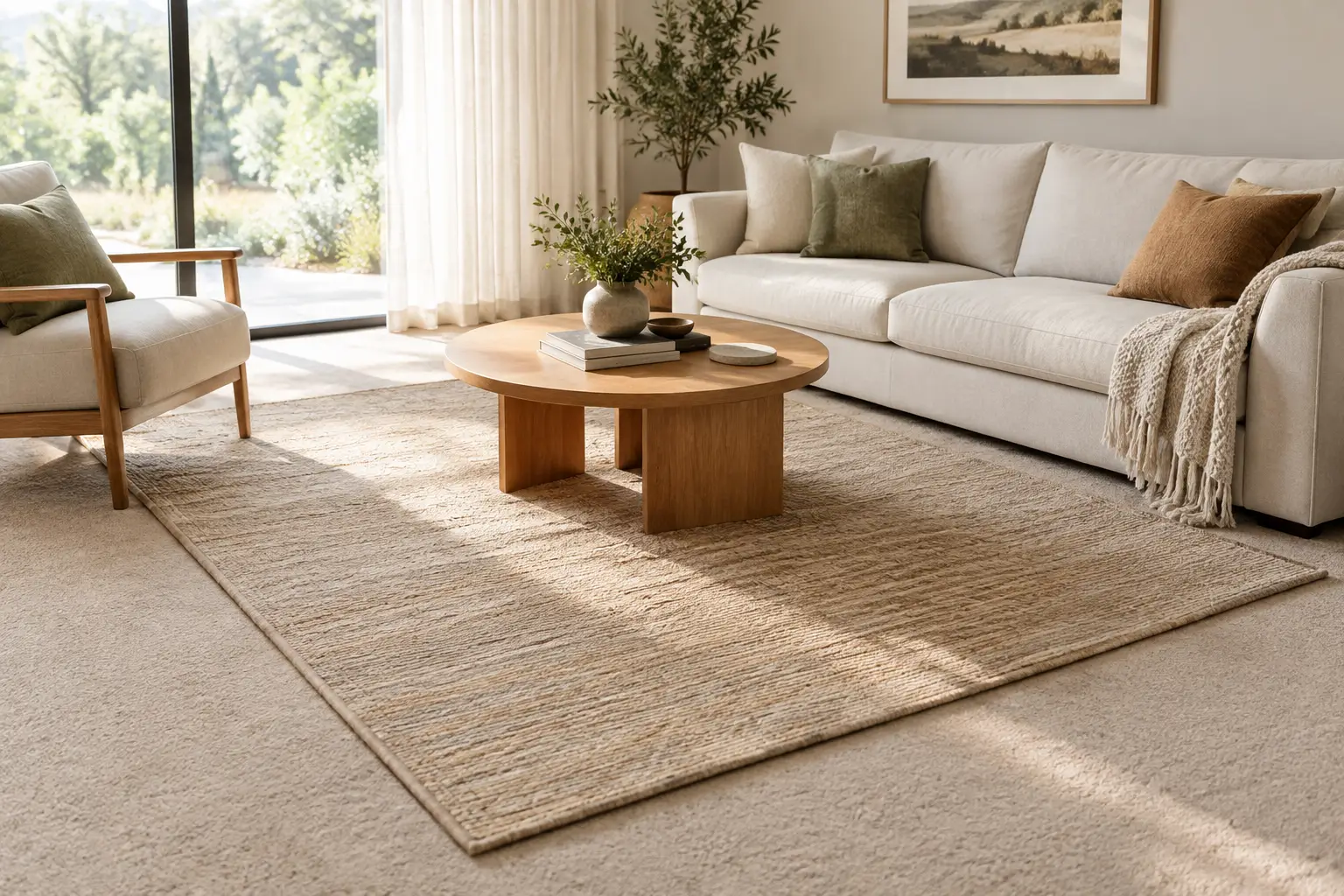
A wall-to-wall carpeted room can feel finished before furniture even arrives, which is why adding another layer may seem unnecessary. Yet can rugs work on carpet? Absolutely. When the proportions, pile and colour are considered together, a rug can give a carpeted room clearer structure, more tactile interest and a stronger sense of calm.
The aim is not to cover carpet for the sake of it. A well-placed rug creates a visual centre for the furniture, softens the transition between pieces and brings a room’s materials into conversation. In open-plan homes, apartments and bedrooms alike, it can make a space feel more intentional without asking you to replace what is already there.
Why rugs on carpet can feel so considered
Carpet provides a broad, continuous base. A rug placed over it introduces a second layer of scale, texture and tone. This is particularly useful in rooms where the furniture appears to float, such as a generous living area with a sofa, occasional chairs and a coffee table set apart from the walls.
Think of the rug as an architectural layer rather than a decorative afterthought. It can gather a seating arrangement into one composed zone, establish a dining area within an open-plan room, or add visual weight beneath a bed. On neutral carpet, a restrained rug with broad, quiet curves, a subtle grid or tonal variation often has more presence than a high-contrast pattern.
Layering is also a practical design decision where replacing existing carpet is not on the agenda. Rental homes, apartments and recently built houses often have carpet chosen for consistency rather than character. A rug gives the room a more personal point of view while allowing the carpet to remain the dependable background.
Can rugs work on carpet in every room?
They can, but the effect depends on the room’s use and the carpet beneath. A rug is often most successful in living rooms, bedrooms and larger studies, where it has enough floor area to define a zone. In a small, fully carpeted room, adding a rug can sometimes make the floor feel busy or fragmented, especially if the rug is too small.
The existing carpet’s pile matters too. A low, dense carpet usually offers a steadier base and lets the rug’s shape read clearly. A very plush or textured carpet can make a fine, lightweight rug look less settled and may obscure delicate surface detail. In that setting, choose a rug with enough visual weight - through texture, a defined border or a slightly stronger tonal contrast - to hold its own.
Dining rooms require a little more thought. Chair legs need to stay on the rug when pulled back, otherwise the movement between two surfaces can feel awkward. If the table is compact and the surrounding clearance is tight, the carpet alone may be the more resolved choice.
Start with proportion, not pattern
The most common issue with rugs on carpet is not layering itself. It is undersizing. A small rug placed in the middle of a large carpeted living room can make both surfaces feel disconnected.
For a living room, allow the rug to sit under at least the front legs of the sofa and main chairs. This creates a continuous furniture grouping rather than a collection of separate pieces. In a more generous room, placing all furniture legs on the rug can feel especially grounded. As a guide, a 200 x 300 cm rug often suits a compact lounge arrangement, while 250 x 350 cm or 300 x 400 cm may better support a larger family room.
In a bedroom, a rug should extend beyond the sides and foot of the bed so there is softness underfoot when you get up. For a queen bed, a 200 x 300 cm rug placed horizontally can work well when positioned under the lower two-thirds of the bed. Larger rooms may benefit from 250 x 350 cm, particularly where bedside tables are included in the arrangement.
The rug does not need to be centred in the room. It should be centred on the life of the room: the seating area, the bed or the dining table. That distinction makes placement feel calm rather than overly formal.
Create contrast gently
A rug on carpet needs some distinction to be visible, but distinction does not have to mean contrast in the loud sense. In fact, close tonal layering is often the more enduring approach for contemporary Australian interiors.
On light beige, oatmeal or soft grey carpet, consider a rug in stone, taupe, warm charcoal, clay or muted brown. The shift in depth gives the furniture an anchor while keeping the room open. A pale ivory rug can also work over darker carpet, provided there is enough difference between the two surfaces to define its edge.
Pay attention to undertones. A cool blue-grey carpet paired with a strongly golden rug can feel unsettled unless those notes are repeated elsewhere. Likewise, a warm-neutral carpet generally sits more naturally with timber, linen, off-white upholstery and rugs that carry sand, oat or earthy brown notes.
Pattern should support the room’s visual rhythm. If the carpet has flecking, stripes or a noticeable loop texture, a quieter rug is usually easier to live with. If the carpet is plain and uniform, a sculptural surface or soft abstract movement can introduce character without making the floor feel overworked.
Choose texture with everyday use in mind
Texture is where this layered approach becomes especially persuasive. Carpet can be soft but visually flat across a large room. A rug with a more defined weave, gentle pile variation or textural surface creates a point of focus and makes a neutral scheme feel less one-note.
There is, however, a balance to strike. Two highly textured surfaces can compete, particularly under strong Australian daylight. In a coastal home with bright, shifting light, a low-profile rug with tonal detail may feel more composed over a textured carpet than a heavily raised design. In a darker urban apartment, a lighter rug can help the floor plane feel more expansive.
Consider daily movement as well. Areas where people walk, sit on the floor or move furniture benefit from a rug that lies flat and feels settled. Avoid placing a delicate-edged layer where office chairs roll regularly or where a door catches across the surface.
Help the rug sit securely
A rug placed over carpet may move less than one placed on timber or tile, but it can still shift, ripple or develop curled corners over time. A rug underlay designed for carpet can add grip and help the piece lie more evenly, especially beneath lighter rugs or in active family spaces.
Before choosing an underlay, check that it is suitable for your carpet type and follow both the rug and carpet care guidance. Keep the floor beneath clean and dry, and lift the rug occasionally when vacuuming so fine debris does not build up at the edges.
Vacuuming should be adjusted to the construction of the rug and its care instructions. Be gentle around fringes or raised textural details, and attend to spills promptly rather than rubbing them deeper into the fibres. These small habits preserve the clean outline that makes layered flooring look deliberate.
Let the room, not the rulebook, decide
There are moments when a rug is not needed. If a bedroom is compact, the carpet is in good condition and the bed already fills the room with comfortable proportion, another layer may add more visual noise than warmth. Similarly, a richly coloured carpet can be allowed to lead, with furniture and curtains doing the quieter supporting work.
But when a carpeted space feels broad, slightly undefined or disconnected, a rug can provide the missing structure. It gives a sofa somewhere to belong, makes a bed feel more grounded and brings tonal and textural depth to the floor plane.
Choose a size that respects the furniture, a colour that works with the carpet rather than against it, and a surface that suits the way your household actually lives. The result need not be dramatic. Often, the most successful layered rooms simply feel more settled - as though every element has found its place.