
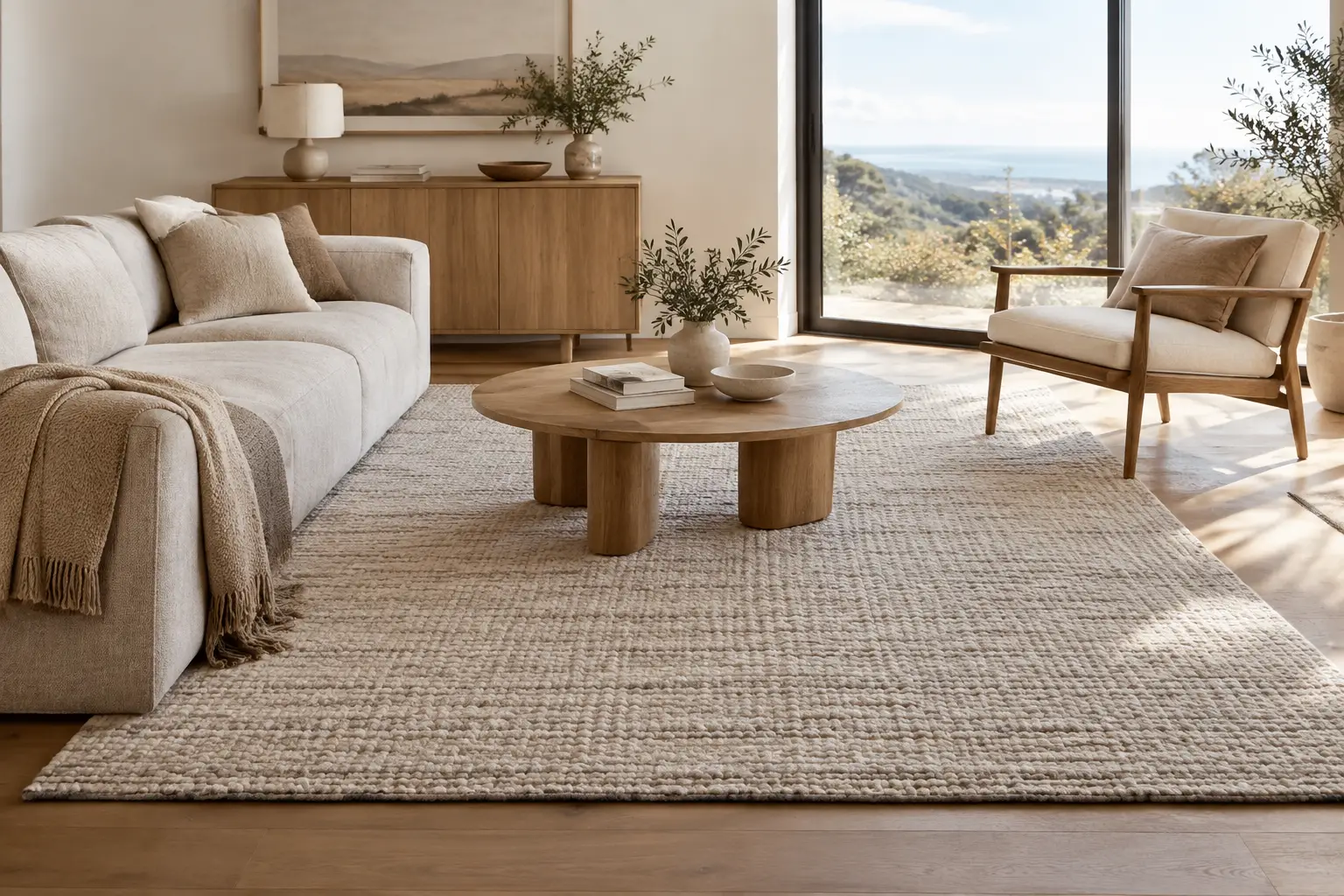
A room can have good bones - timber floors, soft wall colour, considered furniture - and still feel slightly unfinished. Often, what is missing is not another object but a quieter architectural layer underfoot. Textured rugs in modern interiors bring warmth, visual depth and a sense of completion without asking a room to rely on busy pattern or high contrast.
For homes built around warm neutrals, natural materials and restrained forms, texture does much of the expressive work. A raised line, shallow grid, cut-and-loop surface or softly sculptural curve changes how light moves across the floor. It gives the eye somewhere to rest while helping the room feel more grounded and lived in.
Why textured rugs work in modern interiors
Modern interiors can easily lean flat when several smooth finishes sit together: painted walls, timber joinery, stone benchtops, glass, streamlined upholstery and large-format tiles. This is not a problem in itself, but it can make a room feel visually cool or overly controlled. A textural rug introduces variation at floor level, where a large surface has real influence on the overall composition.
The effect is subtle but significant. Rather than adding a bold decorative statement, texture creates gentle shifts in shadow, movement and visual weight. In morning light, a low-relief pattern may appear more defined; by evening, it can recede into a calm tonal field. This quality suits Australian homes particularly well, where strong natural light, indoor-outdoor living and hard flooring are common.
Texture also makes a neutral palette feel more intentional. Ivory beside oat, stone beside taupe, or clay beside muted charcoal can appear layered rather than matched when the materials have different surfaces. A rug with tactile detail gives a pale room depth without making it feel crowded.
Choose texture before pattern
The most successful textured rugs for modern interiors usually begin with restraint. The pattern may be present, but it is held in relief rather than announced through sharp colour contrast. Think broad, quiet curves, a fine linear grid, a subtle border or abstract movement worked through pile height and weave.
This approach is useful when the room already contains strong elements. A veined stone coffee table, shaped sofa, artwork, patterned cushions or a detailed timber grain can all carry visual interest. In that setting, a rug with tonal texture gives structure without competing for attention.
A more visible pattern can work in a pared-back space with plain upholstery and simple finishes. The decision depends on what else is happening in the room. If furniture is sculptural and the palette is varied, choose a quieter surface. If the room feels sparse and linear, a rug with more pronounced relief can bring softness and movement.
Consider the direction of the design
Linear texture can subtly reinforce a room's proportions. Lines running along the length of a narrow living room can make it feel more composed, while a wide, horizontal motif may help a compact room feel less corridor-like. Curved designs soften the straight edges of cabinetry, sofas and dining tables, especially in new builds with crisp architectural lines.
This is not about making a small room look larger through visual tricks. It is about choosing a design whose movement feels at ease with the room's existing geometry.
Get the scale right before choosing a surface
A highly tactile rug cannot compensate for inadequate scale. In a living room, the rug should usually sit beneath at least the front legs of the sofa and occasional chairs. This connects the seating pieces into one zone instead of leaving them floating separately on the floor.
For many Australian living rooms, a 200 x 300 cm rug is a useful starting point, but it is not a universal answer. A generous modular sofa, open-plan layout or wide coffee table may need 250 x 350 cm or larger to feel balanced. In an apartment, a 160 x 230 cm rug can work beneath a compact two-seater, provided it still reaches under the front legs and leaves a clear border around the arrangement.
Allow enough exposed flooring at the perimeter for the room to breathe. The right amount depends on the room size, but a rug should feel anchored rather than marooned in the centre. Before deciding, mark the proposed dimensions with painter's tape or sheets of paper. Walk around it, open doors and notice where the furniture will sit. It is a simple check that often prevents an otherwise considered choice from feeling undersized.
Dining and bedroom placement
Under a dining table, texture should support everyday ease as well as visual calm. Measure from the outer edge of the table and allow roughly 60 to 70 cm beyond it on every side so dining chairs remain on the rug when pulled back. A low, even texture is often more practical here than a pronounced high-low design, as chairs need to move comfortably.
In a bedroom, a rug can sit beneath the lower two-thirds of the bed, extending beyond both sides and the foot. For a queen bed, a 240 x 330 cm rug often gives a generous result, while room dimensions and bedside furniture will determine whether that scale is suitable. If a full-size rug is not practical, two runners placed either side of the bed offer warmth where it matters most.
Build a tonal palette from the floor up
A rug does not need to match the sofa, curtains or wall colour exactly. Exact matching can make an interior feel overly coordinated, particularly when all elements sit within a similar beige or grey family. Instead, look for a shared undertone.
With honey-toned oak or spotted gum, rugs in oat, sand, mushroom, clay and softened brown tend to feel grounded. Against cooler concrete or grey tile, an ivory, warm stone or taupe rug can counterbalance the harder surface without denying the architecture. Charcoal works well as a quiet anchor in rooms with pale upholstery, but a softened charcoal with tonal variation is generally easier to integrate than a flat, inky black.
In coastal homes, strong daylight can make pale rugs appear brighter than expected. A design with a little tonal depth - flecks, relief or a warmer base - may feel more settled than a uniform white. In homes with less direct light, texture becomes especially useful because it creates dimension without requiring a darker palette.
Think about materiality and everyday use
The right rug is not only a visual decision. Consider where shoes are removed, where children play, how often the dining area is used and whether a room opens directly to a deck, courtyard or garden. A more pronounced texture can feel inviting in a quieter sitting room, while a flatter, denser surface may make more sense in a high-use zone.
Wool is valued in interiors for its warmth, natural-looking character and tactile quality, but every rug construction has its own care requirements. Read the specific product guidance before purchasing, particularly if you are choosing for a dining room, entry space or busy family area. Texture can make small marks less visually obvious than a completely flat surface, yet deeper relief may hold dust or crumbs more readily. There is no single best choice - the useful question is how the room is actually used.
For general care, vacuum according to the rug's instructions and attend to spills promptly with a clean, absorbent cloth. Avoid aggressive rubbing, which can push a spill further into the fibres or disturb the surface. Rotation from time to time can help a rug wear more evenly where sunlight and foot traffic are concentrated.
Use a textured rug to define open-plan living
Open-plan rooms benefit from clear zones, especially when the kitchen, dining and living areas share one continuous floor. A rug establishes a visual boundary without adding walls or interrupting sightlines. It tells the room where conversation, reading and settling in happen.
Choose a rug large enough to hold the living arrangement, then let the dining zone remain distinct through its own table, lighting and spacing. The two areas do not need matching rugs. They simply need a related level of visual weight. For example, a softly textured ivory living-room rug can sit comfortably near a tonal stone dining rug when both share warm undertones and restrained pattern.
Texture is particularly effective here because it creates definition without fragmenting the larger space. The result feels structured, but still relaxed enough for daily life.
When choosing a textured rug, start with proportion and placement, then let surface detail refine the mood. The best choice will not merely fill an empty patch of floor. It will bring the furniture together, soften the room's harder edges and make the space feel more settled every time you walk in.