
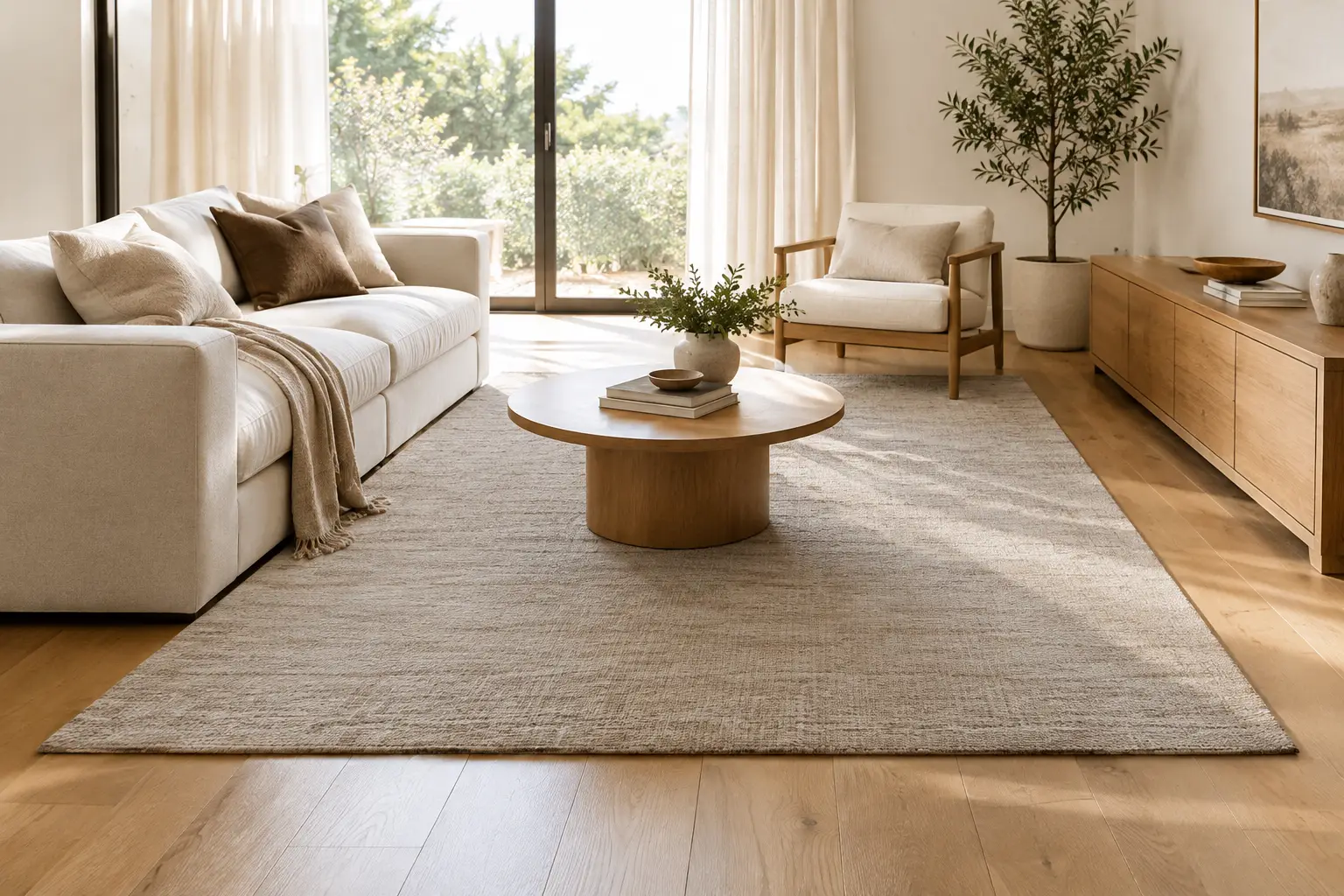
Timber floors bring natural warmth, grain and visual movement to a room. The right rug should not compete with that character. Knowing how to match a rug with timber floors is less about finding an identical colour and more about balancing undertone, texture, scale and the way the room is used each day.
A considered rug gives timber somewhere to rest visually. It softens the hard surface underfoot, grounds furniture and can make an open-plan living area feel more composed. Start by reading the floor as you would any other major finish in the room: it has a colour temperature, depth and distinct visual weight.
Match a rug with timber floors by undertone first
The timber's undertone matters more than whether it appears light or dark at first glance. Look past surface colour and notice what sits beneath it. Oak often carries honey, wheat or soft grey notes. Blackbutt can feel golden and slightly olive. Spotted gum may show warmer reds and browns, while walnut-toned floors tend towards deep chocolate and charcoal.
A rug does not need to replicate these tones. In fact, a close match can make the floor and rug blur into one flat plane. Instead, choose colours that sit comfortably alongside the timber.
With pale oak or ash floors, ivory, oat, mushroom, taupe and softened stone create a quiet, tonal foundation. These colours keep the room light while giving a sofa area clearer definition. A rug with a subtle charcoal line or muted brown detail can add structure without making the floor look yellow by comparison.
Warmer timbers, including many honey-coloured hardwoods found in Australian character homes, tend to suit rugs with warmth in their base. Think sand, flax, clay, camel or a warm grey rather than a distinctly cool silver grey. Cool blue-greys can work, but they need a deliberate connection elsewhere in the room, perhaps through upholstery, artwork or ceramics.
On dark timber, a lighter rug often creates the most useful contrast. An ivory or pale taupe field can lift a room that otherwise feels visually heavy, especially where sofas and joinery are also dark. For a more enveloping effect, choose a mid-tone brown, tobacco or muted charcoal rug, but ensure there is enough variation in value for the rug edge to remain visible.
Do not try to match every timber tone
Timber is naturally varied. Boards hold knots, grain and shifts in colour, particularly in rooms with changing sun. Trying to find a rug that picks up every note is an impossible brief and usually leads to an overly busy result.
Choose one dominant quality instead. You might respond to the floor's warmth with a sand-coloured rug, its darkness with a lighter field, or its organic grain with a softly irregular pattern. This gives the room a clearer visual hierarchy: the floor remains the architectural surface, while the rug becomes the grounding layer for furniture.
A restrained pattern is often particularly effective over timber. Broad, quiet curves, a faded grid, a subtle border or abstract tonal movement can add depth without fighting the lines of floorboards. Highly detailed patterns can work in a room with simple furniture, though they need more visual space around them. If the timber already has strong grain or variation, a quieter rug is usually the calmer choice.
Use contrast to define the furniture zone
The most successful rug and timber pairings often rely on measured contrast. This is not necessarily a dramatic light-versus-dark decision. It may be a difference in texture, pattern or edge definition.
In a living room, the rug should be large enough to make the seating arrangement feel like one connected area. As a general guide, allow the front legs of the sofa and occasional chairs to sit on the rug. In a more generous room, placing all furniture legs on the rug creates a more settled, architectural arrangement.
For many Australian living rooms, a 200 x 300 cm rug suits a compact sofa setting, while 250 x 350 cm or 300 x 400 cm can make better sense in a larger open-plan zone. Measure before deciding. A rug that is too small can look like an isolated patch of colour on a broad timber floor, no matter how well its tone has been chosen.
Leave a visible timber border around the rug where possible. Around 20 to 40 cm is often enough to frame the arrangement, although the right proportion depends on the room. In a narrow apartment living area, less border may be appropriate. The aim is for the rug to feel intentionally placed rather than as though it has been squeezed between walls.
In a dining area, the practical test is straightforward: chairs should remain on the rug when pulled back. Add at least 60 cm beyond the table on each side, then check how that size relates to the surrounding floor. A rug that gives dining furniture adequate room will also protect the calm geometry of the space.
Let texture soften the hard finish
Timber and rugs are a useful material pairing because each brings out something in the other. Smooth or satin-finished boards can benefit from a tactile rug with a raised surface, a low sculptural pile or softly defined woven movement. The contrast makes the room feel warmer without requiring more colour.
Where timber has a rustic texture, visible grain or a matte finish, a more restrained rug can bring balance. A low, even surface in a warm-neutral tone may be enough. This is especially helpful in renovated cottages and coastal homes, where timber, linen, stone and rattan can otherwise create many competing natural textures.
Consider the level of daily activity, too. In a family room, a heavily textured construction may hold more crumbs and require more attentive care than a flatter surface. A pale rug can make a dark floor feel lighter, but it will show marks more readily in a busy entry or beside indoor-outdoor doors. There is no universally right choice - only a balance between the atmosphere you want and the maintenance you are comfortable with.
Account for light before committing to colour
Timber changes throughout the day. Morning sun may make it appear honeyed; a shaded afternoon can pull out grey or brown undertones. This is particularly noticeable in north-facing rooms, homes with large glazed doors and coastal spaces where reflected outdoor light is strong.
View rug samples or colour references next to the floor at different times, rather than deciding under a single overhead light. Bring in the sofa fabric, curtain material and a cushion if you can. A rug colour that appears neutral on a screen may read distinctly pink, yellow or grey beside a particular timber finish.
If your room gets intense sunlight, avoid relying solely on a very pale rug to create brightness. A mid-tone oat, taupe or soft clay can still feel light while carrying enough visual weight to anchor the room. Conversely, in a darker townhouse or south-facing room, a lighter rug with a gentle textural pattern can prevent dark boards from absorbing too much light.
Build a palette around three materials
Once the rug and floor work together, use two or three further materials to make the room feel resolved. For example, pale oak flooring might sit with an oat rug, off-white upholstery and a walnut-toned side table. The timber variations are different, but the warm undertones create continuity.
With rich spotted gum floors, a stone or taupe rug can temper the warmth, while linen upholstery and muted charcoal accents bring definition. If you prefer a more tonal room, repeat a shade from the rug in curtains or a throw, but avoid matching every item exactly. A home feels more liveable when the palette has gentle variation.
In open-plan rooms, rugs are also a practical way to separate functions without adding walls. A larger, lighter rug may define the lounge, while the dining area uses a related but slightly deeper tone. The connection should come from undertone or materiality, not identical designs. This gives each zone its own purpose while keeping the broader space calm.
A rug should make the timber feel more intentional
The right rug does not hide a timber floor. It gives it context. Choose a colour with a compatible undertone, enough contrast to define the furniture arrangement, and texture that suits both the room and its everyday demands.
Before making a final decision, tape out the rug dimensions on the floor and live with the outline for a day or two. Notice the walkways, chair placement and timber border. That small exercise often reveals whether the room needs a quieter tone, a larger scale or simply a rug that gives the floor and furniture a more grounded place to meet.