
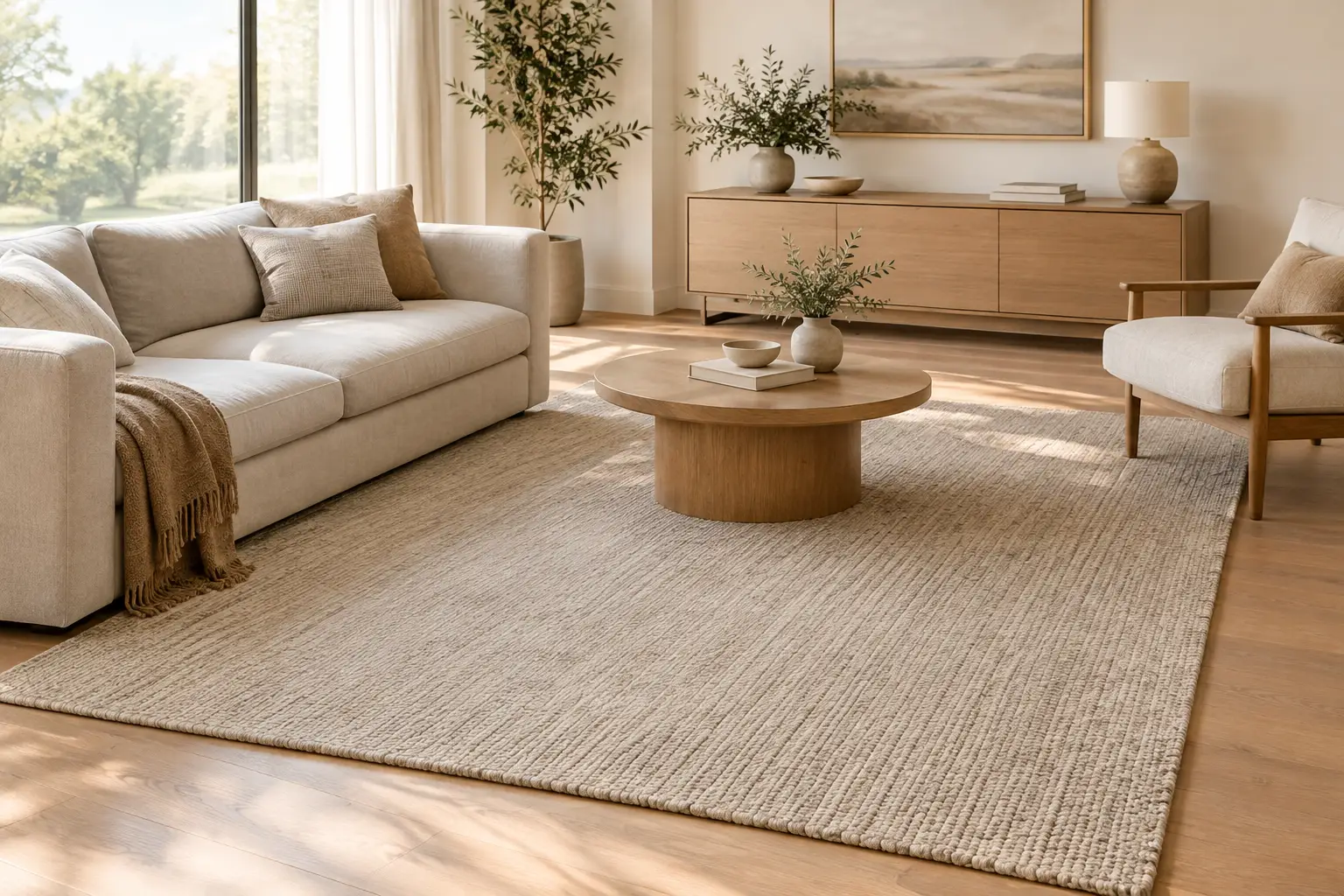
A rug can look quietly simple in a product image, then feel entirely different once it is underfoot in a room. Rug construction shapes that experience: the surface texture, the way light catches the pile, its visual weight and how it sits among timber, tile, upholstery and everyday movement. Understanding the basics makes it easier to choose a rug for how you live, not only for how it photographs.
For a calm, characterful interior, construction is often the detail that decides whether a rug reads as soft and tonal, crisp and tailored, or richly textural. It also helps explain why two rugs in a similar oat or stone shade can create very different moods.
What rug construction actually means
Rug construction describes how the rug is made: how its yarn is formed into a surface, whether it has a pile, how dense that pile is, and how the face is supported underneath. It is separate from material, although the two work closely together. A wool rug can be looped, cut, flatwoven or made with a combination of these techniques, each creating a different finish.
Construction affects the rug’s profile and character. A low, flat surface tends to feel more graphic and architectural. A deeper pile introduces softness and shadow. A raised pattern can add sculptural definition without relying on a high-contrast motif. None is inherently better. The right choice depends on the room’s proportion, the existing materials and the degree of texture the space can hold.
Pile: the surface you see and feel
Pile refers to the yarns that stand up from the base of a rug. It is often the first construction detail noticed underfoot, but pile also changes the way a rug reads from across a room.
Cut pile
In a cut-pile rug, the yarn loops are trimmed at the top, creating an open, soft surface. Depending on the yarn and pile height, it can appear velvety, matte or gently textured. Light may move across it differently as the pile is brushed in another direction, which gives a plain tonal rug more depth.
Cut pile suits rooms that need softness to balance hard finishes. Think of a living room with a timber floor, plaster walls and a low-profile sofa, or a bedroom where a warm-neutral rug is intended to make the first step of the morning feel considered. A very plush surface can be visually generous, however, so it may not be the most balanced choice in a compact room already filled with thick curtains, deep upholstery and layered cushions.
Loop pile
Loop pile leaves the yarns uncut, forming small loops across the surface. It often has a more tailored, textural appearance than cut pile. The loops may be uniform for a restrained, even finish, or varied in height to create quiet movement and relief.
This construction works particularly well when a room needs texture without looking busy. In an open-plan new build, for example, a looped rug in sand, taupe or muted charcoal can bring needed materiality to a seating zone while allowing joinery, art or a view to remain the focus. Its surface tends to read as composed rather than plush.
Cut-and-loop construction
Cut-and-loop rugs combine trimmed yarn with intact loops. This can create subtle linework, folds, grids or organic relief within a single colour palette. The pattern is felt as much as seen, which makes it useful for interiors where the palette is restrained but the room still needs a focal layer.
A sculptural cut-and-loop surface can hold its own beneath a simple sofa and occasional chair. In a room with strongly veined stone or patterned upholstery, though, it is worth choosing a quieter design. Texture works best when it has space around it.
Flatweave construction and visual clarity
A flatweave has little to no raised pile. Instead, its character comes from the structure of the weave, the yarn variation and the interplay of colour across the surface. It sits closer to the floor and usually has a lighter visual presence than a deeper-pile rug.
This makes flatweave construction a thoughtful option for dining areas, apartments and rooms where door clearance is limited. Under a dining table, a lower-profile surface can help chairs move more easily in and out, though the table and chair dimensions should still guide the decision. Ideally, the rug extends at least 60 cm beyond the table edge on each side, so chairs remain on it when pulled back.
Flatweaves can also bring order to an indoor-outdoor living area, particularly where tiled floors and bright Australian light make a room feel expansive. Their linear, grounded quality can define a zone without adding too much softness or bulk. If the room feels acoustically hard or visually stark, pair that clarity with linen curtains, upholstered seating or warmer timber tones.
Density and pile height change the mood
Pile height is simply how tall the surface yarns are. Density describes how closely those yarns are packed. These details influence both the hand feel and the visual finish.
A low, dense pile tends to look neat and controlled, making it well suited to a structured contemporary interior. A higher pile can create a softer, more relaxed effect, especially in bedrooms and living areas designed around broad, quiet curves. Density can help a surface feel refined and substantial, while a more open construction may reveal more of its underlying texture.
It is useful to assess these qualities in relation to furniture legs and room scale. Fine-legged sofas and narrow timber coffee tables can look lost on a very deep, heavily textured rug. Conversely, a large modular sofa with generous proportions often benefits from a rug with enough surface presence to ground it. The goal is visual balance, not matching every element in weight.
Backing, finish and how a rug sits in the room
The back of a rug is rarely the feature people talk about, but it contributes to how the rug lies on the floor and how it feels underfoot. Different constructions can use different backing methods or finishes, and these should be checked in the individual product details rather than assumed from appearance alone.
On smooth timber, polished concrete or tile, consider whether a rug underlay is appropriate for your floor and the rug’s construction. An underlay can add cushioning and help the rug sit more evenly, but compatibility matters. Follow the rug and flooring manufacturer’s care advice, particularly on newly finished or delicate surfaces.
Edges also influence the overall look. A clean bound edge feels tailored and contemporary. Fringe can create a more relaxed finish, while a subtle border can frame a tonal field and give a larger rug clearer definition. In a living room, this frame can be helpful when the rug needs to organise several furniture pieces into one composed arrangement.
Choosing construction room by room
Start with the role the rug needs to play. In a living room, it is usually an anchoring layer. Choose a construction with enough visual weight to sit comfortably beneath the front legs of the sofa and chairs. A textured loop, low cut pile or subtle cut-and-loop design can all work, depending on how much softness the surrounding furniture already provides.
In a bedroom, the rug is more about comfort and proportion. A cut-pile or softly textured design can make a room feel warmer, particularly beside the bed. Place it perpendicular to the bed so it extends beyond both sides and the foot, or use runners where the room layout is tighter.
For a dining room, prioritise a clear, low-profile surface and adequate size. For hallways, consider how the construction relates to door swings, natural light and the existing floor. A narrow runner should feel intentional, with enough breathing room on either side, rather than filling the passage from wall to wall.
Let the construction support the whole scheme
When choosing online, look beyond the lead image. Read the construction description, note whether the surface is cut, looped, flatwoven or mixed, and consider the pile height alongside your room’s finishes. Requesting or viewing detailed imagery where available can also help reveal the direction of the texture and the depth of the relief.
A rug does not need a loud pattern to give a room character. Often, a considered construction in a restrained warm-neutral palette is enough: a shallow loop against timber boards, a tonal cut pile beneath linen upholstery, or a quiet raised border that gathers a seating area into focus. Choose the surface that gives the room the texture it is missing, then let the rest of the home breathe.