
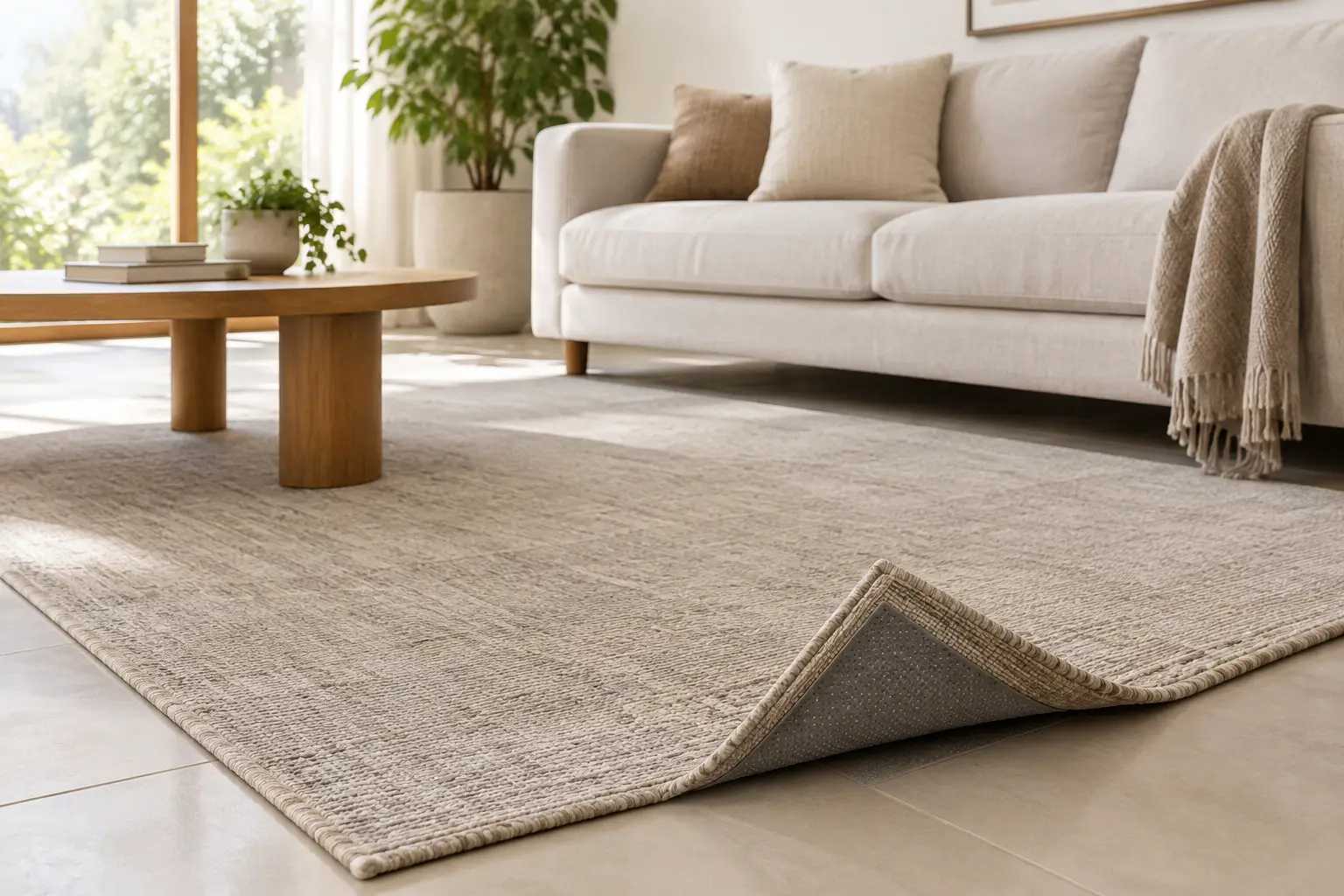
A rug that shifts each time someone crosses the room can make an otherwise composed space feel unsettled. To stop rugs slipping on tiles, start with an underlay suited to hard flooring, then consider the rug’s size, weight, placement and the condition of the tile beneath it. The goal is not simply to hold a rug in place. It is to preserve the grounded, settled feeling a rug brings to a room.
Tiled floors are common in Australian homes for good reason. They keep coastal homes cool, suit busy family areas and work beautifully with stone, timber and warm-neutral interiors. Their smooth, non-porous surface, however, gives a rug very little grip. A well-chosen rug underlay is usually the most considered answer.
Start with the right non-slip underlay for tiles
For most living rooms, bedrooms and hallways, a purpose-made non-slip underlay for hard floors is the most reliable way to keep a rug from moving. It sits between the tile and the rug, creating friction while adding a lightly cushioned layer underfoot.
Choose an underlay that is clearly intended for tiled or other hard flooring, rather than one designed for carpet. Check that it is compatible with your particular tile finish and any sealant used on grout or natural stone. Some materials can react with finishes, leave residue or discolour surfaces over time, particularly where heat and sun are involved. If you are unsure, test a small piece in a concealed area first and follow the flooring manufacturer’s care advice.
The underlay should sit slightly inside the edge of the rug, generally by 2 to 5 cm on each side. This keeps it out of sight and allows the rug’s border to lie naturally. A pad that reaches the very edge can become visible, gather at the corners or create an uneven line.
Thickness is a matter of proportion. A fine, low-profile underlay generally suits a flatwoven rug or a dining area where chairs need to move easily. A denser pad can give a larger wool rug more softness and visual weight in a living room or bedroom. It should support the rug without making its edges feel raised or unstable.
Clean the tile before placing the rug
Even the best underlay cannot grip properly over dust, grit, oil or leftover cleaning product. Before laying it down, vacuum or sweep the floor, then clean it with a method appropriate to your tile. Let the surface dry fully before positioning the underlay and rug.
This small step matters more in kitchens, entry areas and indoor-outdoor rooms, where fine sand, sunscreen residue and everyday traffic can build up quickly. It also gives you a useful chance to check the grout lines and tile surface for moisture. A rug should not be laid over a damp floor, particularly after mopping or a wet day.
Once the rug is in place, lift a corner occasionally to remove debris that may have worked underneath. In bright rooms with doors opening to a terrace or courtyard, this is often part of ordinary rug care rather than a sign that anything is wrong.
Match the rug size to the room, not just the clear floor
A rug that is too small is more likely to slide because it has little furniture weight holding it in place. It can also make a room feel fragmented. In a living room, aim for the front legs of the sofa and occasional chairs to sit on the rug where the layout allows. This creates a more anchored seating zone and helps the rug stay settled during daily use.
For a standard sofa arrangement, a 200 x 300 cm rug often offers more stability than a small centre rug floating between furniture. The right size depends on the room’s proportions, of course. In a compact apartment living area, a 160 x 230 cm rug may be the more balanced choice, provided it reaches beneath the front of the main seating.
In a bedroom, position the rug so it extends generously beyond the sides and foot of the bed, or use runners on either side. A larger rug placed beneath the lower two-thirds of the bed has the benefit of furniture weight, while a narrow bedside runner will usually need a dedicated hard-floor underlay.
Dining rooms need a different approach. The rug should extend at least 60 cm beyond the table on all sides so chairs remain on the rug when pulled back. This also limits the repeated edge-catching that can cause a rug to shift or bunch. Choose a low, even pile where chair movement is frequent, and use an underlay that does not add unnecessary bulk.
Consider the rug’s construction and visual weight
Not all rugs behave the same way on tile. Lightweight flatweaves, small runners and fine cotton-style rugs tend to move more readily because they have less weight and less surface contact. They can work well in relaxed spaces, but they need a carefully fitted underlay to stay composed.
Heavier wool rugs often feel more stable, especially once placed beneath furniture, though they can still slide on polished tiles without support. Their tactile surface and natural visual weight can soften a cool floor beautifully, bringing warmth to rooms with crisp white walls, limestone-look tiles or pale timber joinery. An underlay helps that materiality feel more comfortable underfoot while keeping the rug in its intended position.
Pay attention to the rug’s edges as well. A corner that curls upwards is not always a slipping issue. It may be caused by the way the rug was rolled, a change in humidity, or uneven pressure from furniture. Give a newly unrolled rug time to relax, reverse-roll it gently if appropriate for its construction, and avoid placing heavy objects directly on a lifted corner. If the problem persists, a fitted underlay can help hold the rug flat.
Avoid quick fixes that can damage tiles or the rug
Adhesive tapes, glues and improvised sticky pads can seem appealing when a rug will not stay put. On tiled floors, they are rarely the best long-term choice. They may leave residue, affect finishes or pull at the rug backing when removed. They also make regular cleaning more difficult.
Furniture can provide useful stability, but it should not be the only solution. A coffee table placed in the centre of a rug may reduce movement, yet the outer edges can still shift when walked on. Likewise, placing a heavy console on one end of a runner can leave the remaining length prone to sliding. Underlay gives more even support across the whole surface.
If a small doormat or kitchen rug keeps moving despite an underlay, consider whether the location is simply too exposed to moisture, frequent door movement or constant foot traffic. A more substantial mat designed for that purpose may be a better fit than forcing a decorative rug to do a highly functional job.
Recheck placement as your room evolves
Rooms change with the seasons and with everyday living. A sofa may move to catch winter sun, dining chairs may be swapped, or an open-plan room may take on a new rhythm once children, guests or pets use it differently. Recheck the rug after any furniture rearrangement, especially on smooth tiles.
A rug should sit square with the architecture of the room or deliberately follow the furniture grouping. In an open-plan home, this can mean aligning it with the sofa rather than the entire room. The more intentional the placement, the less likely people are to walk across an exposed corner or nudge it out of line.
A stable rug lets texture, tone and proportion do their quiet work. Once the practical foundation is resolved, the rug can soften the hard finish beneath it, ground the furniture above it and make the room feel easier to live in.