
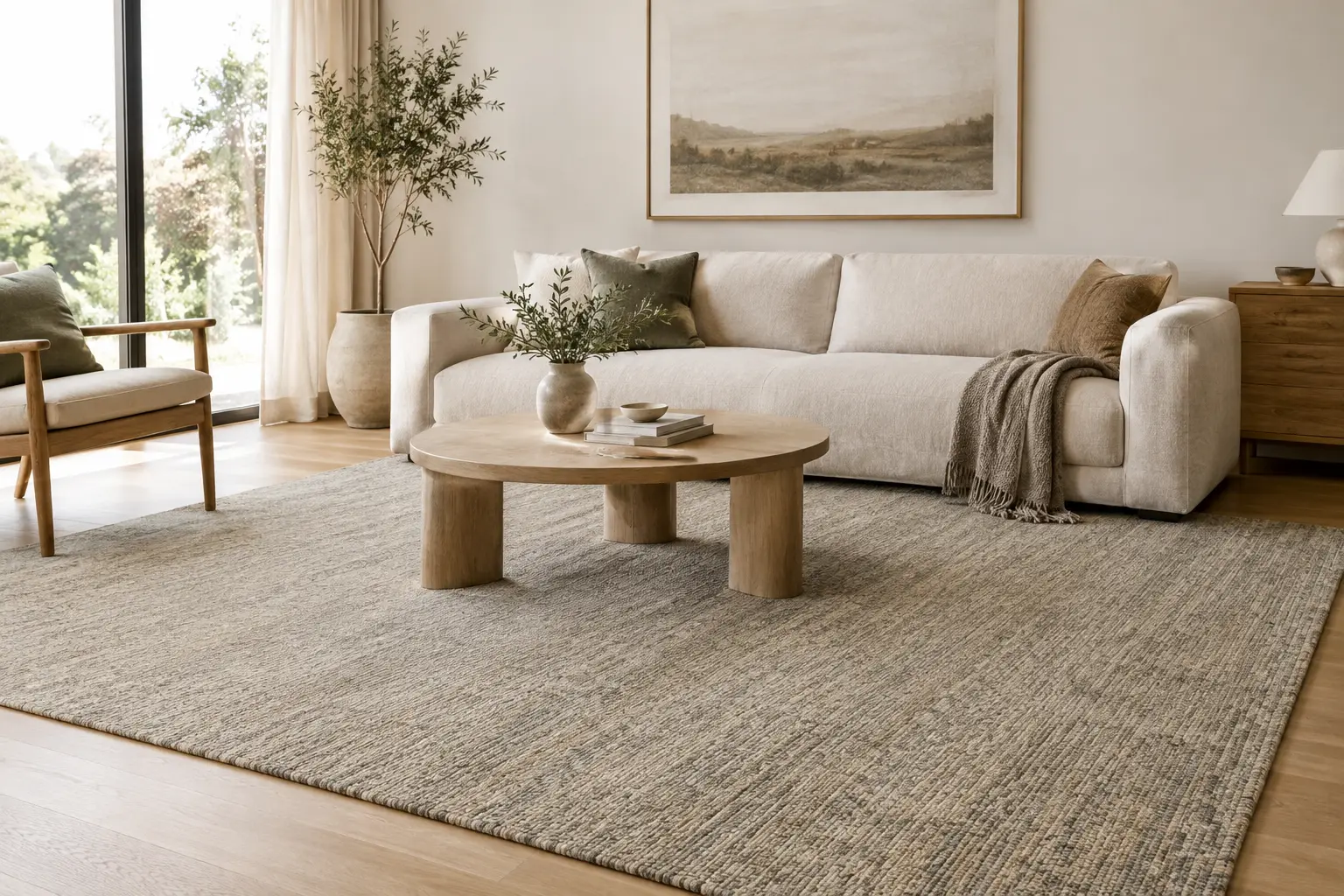
A rug can look right in a room and still feel wrong underfoot, sit awkwardly with the furniture, or demand more care than your household can reasonably give it. Rug materials shape those everyday realities. They influence texture, visual weight, how a colour reads in changing light and whether a rug feels suited to a quiet bedroom, a busy dining area or an open-plan living space.
There is no single best choice. The considered material is the one that suits the room’s use, the amount of natural light, the finishes around it and the level of maintenance you are comfortable with. Start there, rather than with colour alone.
Why materiality changes the whole room
A rug is an architectural layer. It softens timber, tile and concrete floors, grounds a seating arrangement and gives a large room clearer structure. Its materiality determines how strongly it performs that role.
A dense, low-profile surface can bring a composed, tailored quality to a room with sculptural furniture and clean lines. A more textural fibre introduces movement and warmth, particularly where walls, upholstery and joinery are tonal and restrained. In a warm-neutral interior, this difference can be more influential than pattern.
Material also changes colour. An ivory wool rug may appear softly matte and nuanced, while a similar shade in a smoother synthetic fibre can reflect light differently. This matters in Australian homes, where strong coastal light, broad north-facing windows and indoor-outdoor living areas can reveal subtle shifts across the day.
Wool rugs: warmth with everyday ease
Wool is often chosen for its natural-looking texture, gentle lustre and ability to make a room feel settled rather than overly finished. It works especially well with timber, stone, linen and softly upholstered furniture because it has visual depth without needing a loud pattern.
For living rooms and bedrooms, wool can offer a comfortable balance of softness and structure. A tonal wool rug with broad, quiet curves or a subtle grid can anchor a sofa and occasional chairs while allowing other pieces in the room to retain their presence. It is also a natural fit for bedrooms, where the first step out of bed benefits from a warmer, more tactile surface.
Wool does require considered care. Loose dirt should be removed regularly, spills should be attended to promptly and the care guidance for the specific rug should always take priority. Shedding can occur with new wool rugs, particularly those with a higher pile, and this generally calls for patience and gentle vacuuming rather than concern. If your household includes frequent entertaining, young children or pets, a lower-pile wool design may feel more manageable than a deeply textured option.
Cotton rugs: relaxed and low visual weight
Cotton tends to bring a lighter, more casual character. It can suit smaller rooms, apartments and spaces where you want softness without adding much visual density. Flatwoven cotton styles are often useful in a study, sunroom or beside a bed, where the rug is not asked to define a large furniture setting.
The trade-off is that cotton may not have the same substantial feel as wool in a large living room. In an expansive open-plan area with a generous sofa, dining table and hard flooring, a lightweight rug can appear to recede. Scale remains important: even the right material will not anchor a room if it is too small.
Jute and plant fibres: texture first
Jute and other plant-fibre rugs bring a distinct, organic texture. Their irregular weave and earthy colour variation can soften contemporary interiors that risk feeling too smooth or uniform. They can be particularly effective in coastal homes, renovated character houses and rooms with pale timber, clay-toned ceramics or woven accents.
These materials are usually selected for their textural contribution rather than softness. Underfoot, they can feel firmer and more pronounced than wool. Their natural variation is part of the appeal, but it also means they may be less suited to a room where you want a plush, quiet surface, such as a main bedroom.
Consider placement carefully. A plant-fibre rug can give an entry or occasional sitting area a grounded quality, but it may be less practical where spills are a regular part of life. Think about how the room is actually used, not only how it will look when newly styled.
Synthetic rug materials: practical options with a different feel
Synthetic fibres are widely used across the rug market and can suit homes that need a straightforward, lower-maintenance option. They are available in many colours, patterns and pile heights, including designs that imitate natural fibres.
The key is to assess the finish rather than assuming every synthetic rug will feel the same. Some have a smooth, uniform surface; others have more texture and tonal variation. In a calm interior built around natural materials, a highly shiny or overly regular fibre can feel visually separate from surrounding timber, linen or stone. A matte finish and restrained colour palette will usually integrate more easily.
Before choosing, request or review as much material and construction information as possible. Look at the pile height, surface texture and care instructions, then consider the rug in relation to your flooring and upholstery. A rug does not need to match every finish, but it should feel connected to the room’s overall material language.
Blended fibres: balance depends on the construction
Blends combine fibres to achieve a particular balance of feel, texture and price point. A wool blend, for example, may retain some of wool’s softness and visual warmth while introducing another fibre into the construction. The result varies widely, so the label alone is not enough to tell you how the rug will behave or feel.
Pay attention to the proportion of each fibre where it is provided, as well as whether the rug is flatwoven, looped or cut pile. A looped surface often reads as structured and textural; a cut pile can feel softer and more velvety. Neither is inherently better. A low loop can suit a composed living area, while a more tactile pile can give a bedroom or reading corner added comfort.
Match rug materials to the room, not just the look
Living rooms generally benefit from material that can hold visual weight. A rug should extend under at least the front legs of the sofa and chairs where possible, allowing the seating area to read as one composition. Wool and considered blends often work well here because they offer texture without making the room feel busy.
In dining rooms, proportion and surface profile matter. Choose a rug large enough that chairs remain on it when pulled back from the table - usually allowing around 60 to 75 cm beyond the table edge. A lower-profile material is often easier to live with in this setting, as dining chairs need to move across the surface comfortably.
Bedrooms allow more softness and personal preference. A larger rug positioned beneath the lower two-thirds of the bed can bring warmth to both sides and the foot, while runners can work in tighter rooms. If the bedroom receives strong morning sun, look at the rug in that light before settling on a pale tone.
For an entry, hallway or indoor-outdoor-adjacent zone, choose with the daily path in mind. These spaces benefit from a rug that does not feel overly precious, and from a size that leaves a clear border of flooring around it. The rug should welcome movement, not interrupt it.
A considered way to make the final choice
Start with the room’s practical demands, then narrow the material options by touch and visual weight. Consider how much texture already exists in the room, whether your flooring is cool or warm, and whether the rug needs to quietly recede or provide definition between furniture zones.
A sample image can be useful, but material deserves closer attention than a screen can offer. Read the construction details, follow the care guidance supplied for that design and picture the rug after an ordinary week at home, not only on the day it arrives. The right material will support the way your room is lived in while making its proportions feel more resolved.