
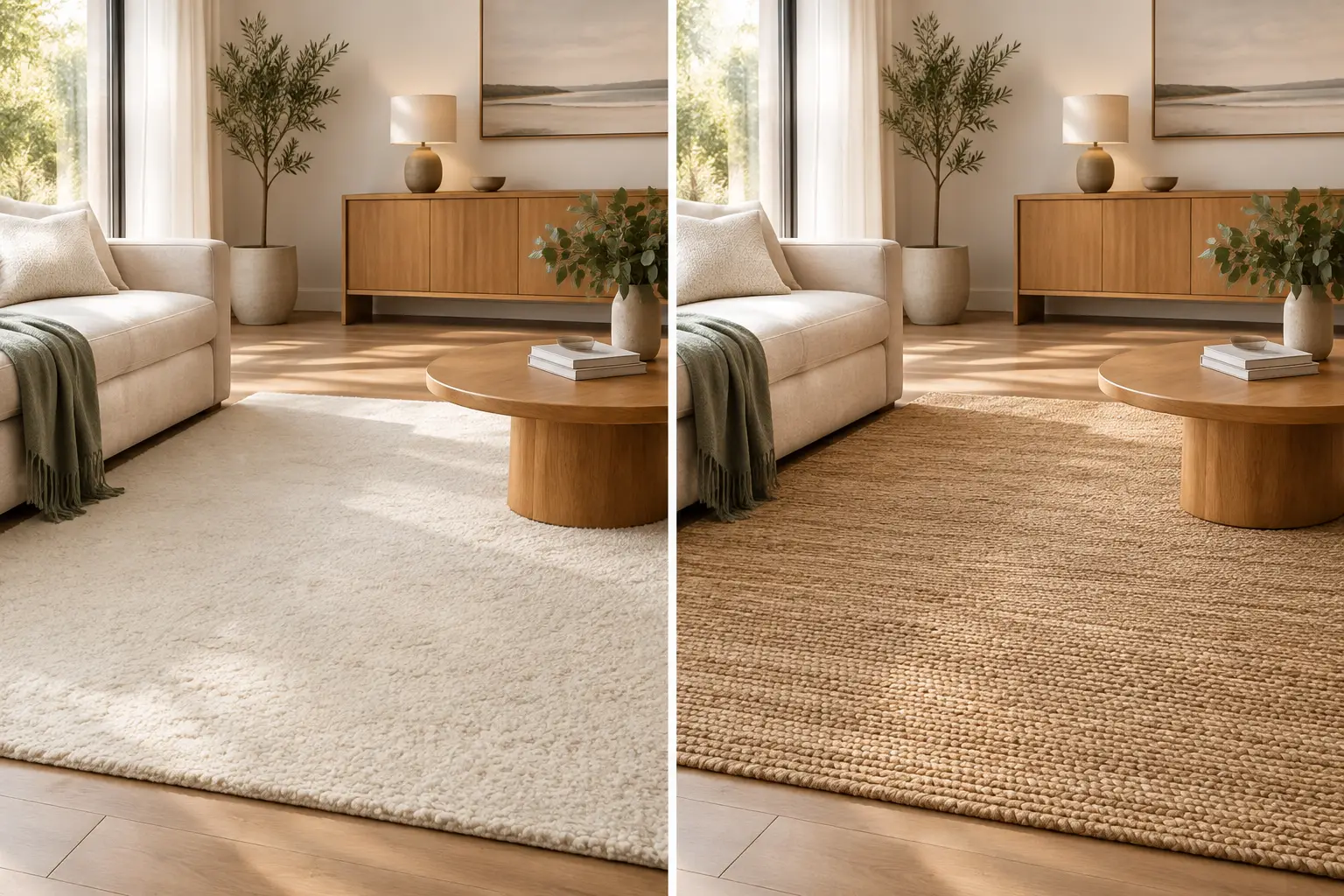
A rug can make a room feel settled or slightly unresolved before any furniture has changed. When choosing a wool rug or jute, the real question is not simply which material looks better. It is which one gives your room the right balance of softness, texture, visual weight and everyday ease.
Both have a place in calm, characterful interiors. Wool tends to bring warmth, depth and a more composed finish, while jute offers a dry, earthy texture that can feel relaxed and casual. The better choice depends on the room, the light, the flooring beneath it and how you live there.
Wool rug or jute: the essential difference
Wool and jute create very different experiences underfoot and in the wider composition of a room.
A wool rug has softness and density that helps absorb some of the hardness of timber, tile and concrete floors. Its surface can hold tonal variation, sculptural pattern and quiet textural detail without making a room feel busy. This makes wool particularly useful when a living area needs to feel grounded, or when an open-plan room needs a clearer sense of structure.
Jute is made from plant fibre and has a more visible, organic weave. It introduces a rawer texture, often in shades of sand, oat and warm brown. In the right setting, it can make a coastal home, sunlit apartment or relaxed family room feel less polished and more elemental. It also has a lighter visual presence than many wool rugs, especially against pale floorboards or limestone-look tiles.
Neither material is universally better. Wool generally suits a more layered, soft-edged interior, while jute is often chosen for a pared-back room where texture is doing most of the decorative work.
Consider how the rug needs to feel
The first distinction is tactile. A wool rug usually feels softer and more cushioning underfoot, particularly in a lounge room or bedroom where people sit, stretch out or walk barefoot. It can soften the experience of a tiled new build or a renovated home with original timber boards, giving the room a more liveable quality.
Jute has a firmer, more tactile surface. Its appeal is in that irregular weave and dry natural texture, rather than plushness. It may be the right choice if you like a room to feel spare and textural, or if soft upholstery, linen curtains and cushions already provide enough softness.
Think about the contrast already present. In a room with a low boucle sofa, layered linen and rounded timber furniture, a jute rug can bring useful restraint. In a room with sleek cabinetry, leather seating, stone surfaces or large expanses of tile, wool can introduce the warmth and visual calm those harder finishes may need.
Texture is also visual weight
Texture affects how substantial a rug feels in a room. Jute’s open, fibrous construction can read as casual and light, even when the rug is generously sized. A wool rug often has more visual density, which can help anchor a substantial sofa, a large dining table or a wide open-plan living zone.
This matters in Australian homes with broad living spaces and indoor-outdoor sightlines. A rug should hold its own against large windows, a timber dining setting and the openness of a patio beyond. If the rug looks too slight, furniture can appear to float rather than form a composed arrangement.
Choose based on the room, not just the look
A material that works beautifully in a bedroom may be less appropriate for a busy dining area. Let the room’s purpose guide the decision.
Living rooms
For most living rooms, wool is the more versatile choice. It adds comfort beneath a seating area and can bring disparate pieces together: a sofa, occasional chair, coffee table and side table become one defined zone. A wool rug with a restrained border, broad quiet curves or a tonal surface can provide interest without competing with art, joinery or a view.
Size is central here. Aim for the rug to sit beneath at least the front legs of the sofa and chairs. In a generous room, placing all furniture legs on the rug can create an especially grounded result. A small rug in the middle of a large lounge room will make either material feel less considered.
Jute can work well in a living room with an informal, coastal or earthy direction. It is particularly effective when the furniture has enough softness of its own and the room does not need additional pattern. Consider a rug pad beneath it to help create a more stable, cushioned feel and to protect the floor finish.
Bedrooms
Wool is often the more comfortable bedroom choice because it offers warmth underfoot when getting out of bed, especially in cooler southern winters. Its softer surface can also make a bedroom feel quieter and more settled, which suits a room intended for rest.
A large rug placed horizontally under the lower two-thirds of a queen or king bed creates balanced framing on both sides and at the foot. As a guide, allow enough rug to extend beyond each side so your feet land on it rather than the floor. For tighter bedrooms, two runners can offer a practical alternative.
Jute can suit bedrooms with plenty of bedding, upholstery and layered textiles, but its firmer hand is worth experiencing in context. It may feel more appropriate in a guest room or a warmer coastal setting than in a bedroom where underfoot softness is the priority.
Dining rooms
A dining rug needs generous proportion and practical thinking. It should extend at least 60 cm beyond the table on all sides, so chairs remain on the rug when pulled back. For a six-seat table, this frequently means a rug around 240 x 330 cm, depending on the table dimensions and circulation space.
Wool can give a dining area a more resolved, architectural feel, especially in open-plan homes where the rug is defining the eating zone. Choose a tonal design with enough surface movement to sit comfortably beneath timber or upholstered chairs.
Jute’s texture can look striking beneath a timber table, but its pronounced weave may make chair movement feel less smooth. It is best considered where the dining area is used more gently and where a natural, informal materiality is central to the scheme.
Light, colour and the Australian home
Natural materials change with the light around them. This is worth considering in homes with intense afternoon sun, bright coastal light or the softer grey light of inner-city terraces.
Jute usually brings a warm golden or sandy undertone. It can sit naturally with oak, walnut, travertine, rattan and warm-white walls. In a room with cool grey flooring or blue-grey paint, however, it may create a stronger contrast than expected.
Wool offers greater scope for tonal nuance. An ivory, stone, taupe or muted charcoal wool rug can bridge warm timber, cream upholstery and darker joinery without making the palette feel overly matched. A softly patterned wool surface can also make a large neutral room feel less flat while retaining a restrained mood.
Before deciding, look at the fixed elements that are expensive or difficult to change: flooring, sofa upholstery, curtains and joinery. The rug does not need to match them. It needs to relate to their undertones and give the room a balanced centre of gravity.
Upkeep and everyday realities
Material choice should leave room for real life. Wool and jute both benefit from regular, gentle vacuuming, but their care needs differ. Always follow the care guidance supplied for the specific rug, as construction and finish can affect the right approach.
For wool, attend to spills promptly by blotting rather than rubbing, and avoid soaking the pile. Professional cleaning may be appropriate for a significant spill or an overall refresh. Wool’s textured surface and tonal variation can be useful in rooms where you want a softer, less clinical finish, but a pale rug will still ask for thoughtful placement in a high-use household.
Jute is generally better suited to dry indoor areas. Moisture can affect natural plant fibres, so it is less suited to places where wet feet, drips or frequent spills are part of the routine. If you are furnishing a room that opens directly to a pool, garden or busy entry, consider whether the material will suit the way the room is actually used rather than the way it looks in a photograph.
A rug pad is a considered addition beneath either material. It can help the rug sit more securely, add a little cushioning and reduce friction against hard flooring.
A decision that can evolve with your home
Choose jute when you want a crisp, earthy layer and your room already has softness through furniture and textiles. Choose wool when you want the rug to do more of the anchoring work: softening hard finishes, defining a zone and introducing tonal depth underfoot.
For many homes, particularly living rooms and bedrooms, a wool rug offers more flexibility as furniture, paint colours and styling evolve. Its texture can feel quietly present rather than decorative, which is why design-led wool rugs continue to work so well in interiors built around warm neutrals, natural materials and everyday living.
The most useful test is to picture the room at its busiest, not just at its tidiest. A considered rug should still feel right with shoes by the door, a book on the sofa and afternoon light moving across the floor.