
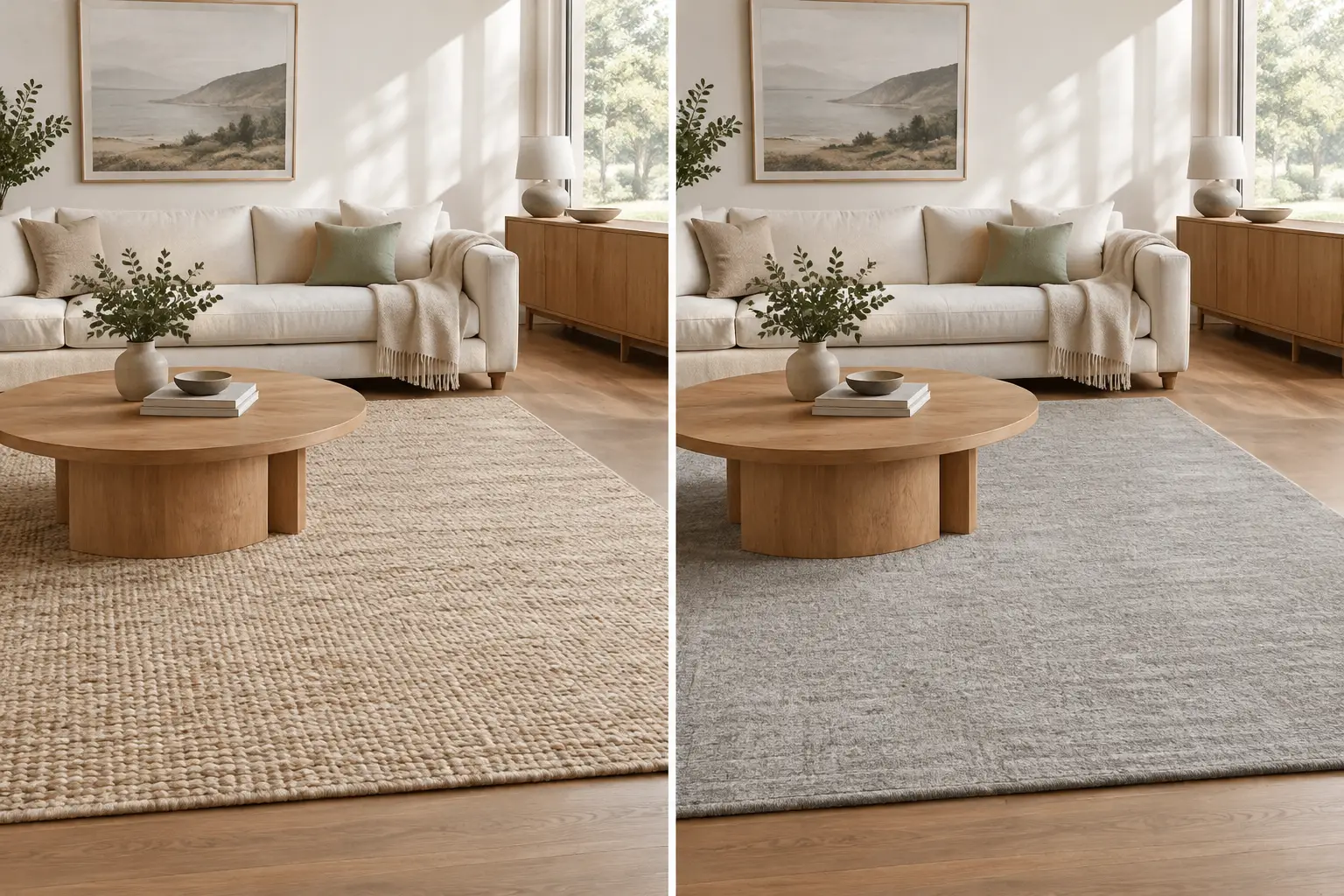
A rug may sit low in a room, but its material changes the experience of everything around it. Under a linen sofa, beside a timber dining table or across a tiled open-plan living area, wool versus synthetic rugs is not simply a question of price or appearance. It is a decision about texture, maintenance, visual weight and how you want the room to feel each day.
For many homes, wool brings a softer, more grounded sense of materiality, while synthetic fibres can suit situations where a particular construction, finish or care routine is the priority. Neither is automatically right. The more useful question is which trade-off suits your room, household and way of living.
Wool versus synthetic rugs: the short answer
Choose wool when you want tactile depth, a naturally varied surface and a rug that feels like an integral architectural layer in the room. Wool works especially well in living rooms, bedrooms and quieter zones where warmth underfoot and tonal texture can do much of the visual work.
Consider a synthetic rug when you prefer a more uniform finish, are working to a tighter furnishing budget, or need to follow a simpler care approach specified for a particular rug. Synthetic is a broad category, however. Fibre type, pile height, backing, construction and colour all affect how a rug looks and performs, so it is worth looking beyond the label alone.
The best choice should support the room rather than compete with it. A rug needs enough scale to ground furniture, enough texture to soften hard finishes, and a material that feels realistic for everyday use.
The difference you can see and feel
Wool has tonal movement and tactile depth
Wool has a character that is difficult to replicate exactly. Its fibres can create subtle variation in tone and surface, which gives a warm-neutral rug more depth than a completely flat colour. In a room with plaster walls, oak or walnut-toned timber, linen curtains and soft upholstery, that quiet variation can make the scheme feel composed rather than overly matched.
This is particularly useful when a room relies on restrained colour. An ivory, oat, stone or muted charcoal rug does not need a loud pattern to hold its place. A textural wool surface can introduce visual interest while keeping the larger composition calm.
Wool is also often chosen for the sensation it brings underfoot. In bedrooms, it can soften the first steps of the morning. In a living room, it reduces the hard, echoing quality that tiled floors, polished concrete and timber can sometimes create. This matters in Australian homes where broad, open spaces and indoor-outdoor connections can leave interiors feeling visually expansive but acoustically spare.
Synthetic fibres can create a cleaner, more consistent finish
Synthetic rugs can have a more even colour and pile appearance, particularly in lower-profile or finely patterned designs. That consistency may suit a room where the rug’s role is to provide a quiet field beneath more expressive furniture, artwork or joinery.
They can also make sense for a temporary furnishing phase, a first apartment or a space where you expect the layout to change soon. If you are still deciding whether a dining zone needs a 240 x 340 cm rug or whether the sofa should sit closer to the wall, a lower-commitment material may be practical.
The trade-off is often visual. Some synthetic finishes can read smoother or more uniform than wool, which may suit a crisp contemporary scheme but feel less at home in an interior built around natural timber, stone, ceramics and relaxed upholstery. Look at samples or close-up images where possible, and consider the rug in the changing light of your own room.
Consider the room before the fibre
Material matters, but placement usually has the greater effect on whether a rug feels resolved. A finely made rug that is too small will still make a living room feel disconnected. A well-proportioned rug can bring disparate pieces together, even in a modest apartment.
In a living room, aim for the rug to extend beneath at least the front legs of the sofa and occasional chairs. This creates one defined seating area rather than a collection of separate objects. As a guide, allow around 20 to 30 cm beyond each side of the sofa where the room permits. In many Australian living rooms, 200 x 300 cm is a useful starting point, while 250 x 350 cm or 300 x 400 cm may better suit generous open-plan spaces.
For a dining area, the rug should extend beyond the table far enough for chairs to remain on it when pulled back. Around 60 cm past the table edge is a useful allowance. Here, pile height deserves attention: a flatter rug can make chairs easier to move, regardless of whether the fibre is wool or synthetic.
In bedrooms, let the rug project beyond the sides and foot of the bed to create a soft border around the sleeping zone. A larger rug placed under the lower two-thirds of the bed often gives a more balanced result than two small runners that visually fragment the floor.
Everyday care is part of the decision
No rug material is maintenance-free. The right approach depends on its fibre, construction, pile and the care instructions provided for that individual piece.
Wool rugs may shed loose fibres when new, especially with a fuller pile. This is commonly managed with regular gentle vacuuming, avoiding aggressive rotating brush settings unless the care guidance specifically allows them. A rug pad can help keep the rug stable and provide an additional layer between the rug and flooring.
For spills, speed and restraint are usually more useful than vigorous cleaning. Blot with a clean, light-coloured cloth rather than rubbing, which can spread the spill or disturb the pile. Avoid reaching immediately for a strong household cleaner. Check the maker’s care instructions and seek professional advice for larger marks or uncertain treatments.
Synthetic rugs also need considered care. A lower pile may be easier to vacuum, but that does not mean every synthetic rug can be treated in the same way. Backing materials and construction methods vary, and excessive moisture or unsuitable cleaning products can cause problems. A practical choice is one whose care requirements you can comfortably maintain, not one that promises an unrealistic level of ease.
Think about light, colour and visual weight
The material of a rug changes the way colour behaves. Wool often has a softened, slightly mottled appearance that can make pale tones feel warmer and darker tones feel less stark. This is valuable in rooms with strong afternoon sun, where a flat block of beige or grey can sometimes look cooler or more severe than expected.
Synthetic fibres may present colour more cleanly and consistently. That can be useful when you need a precise note in the scheme, perhaps a muted clay tone to echo artwork or a charcoal border to connect with black-framed windows. But a close colour match is not always the goal. A rug should relate to the room’s palette without disappearing into it.
Consider visual weight as well. A dense, dark or heavily patterned rug sits more firmly in a room. A pale, textured rug with broad, quiet curves can make a compact lounge feel lighter while still grounding the furniture. In coastal homes and bright new builds, this balance often prevents the room from becoming either too bare or too busy.
When each option tends to suit
Wool is often the more considered choice when the rug is central to the room’s atmosphere: beneath a sofa, under a bed, or anchoring a lounge area that needs softness and structure. Its textural quality can carry a restrained interior without requiring additional pattern or decoration.
Synthetic may suit a secondary room, a changing household setup or a space where a flatter, more uniform surface aligns with the brief. It can also be a sensible option when budget needs to be allocated across several furnishing decisions at once, such as window coverings, lighting and seating.
There is no need to use the same material throughout a home. A wool rug may give the main living room the warmth it needs, while a different material is appropriate in a study, guest room or occasional-use space. What matters is that each choice feels proportionate to the room and honest about how it will be used.
Choose for the life of the room
Before settling on wool or synthetic, stand in the room and notice what it is missing. Is the seating area floating? Do timber floors need a softer counterpoint? Does the open-plan layout need a clearer centre? Or does the room already have plenty of texture and need a quieter foundation?
A rug earns its place when it answers those questions with calm assurance. Start with placement and proportion, then choose the materiality that will make the room feel grounded, liveable and comfortably your own.